Connectivity That Delivers Seamless Guest Experiences

Support smart hotels, connected guest services, digital access, and hotel operations with resilient, multi-network cellular connectivity. Deploy across every property, reduce downtime, and manage connected devices from one platform.

  • One SIM icon

    One SIM

    180+ countries · multi-network fallback

  • Form factor icon

    Any form factor

    2FF, 3FF, 4FF, MFF2, eSIM (eUICC)

  • Protocol icon

    Any protocol

    OCPP 1.6 · OCPP 2.0.1 · MQTT · TLS

  • Scale icon

    Any scale

    No per-SIM monthly minimums

The data reality

How much data do connected hospitality devices actually use?

Hotels rely on a growing number of connected devices to enhance the guest experience and streamline operations. From smart locks and self-check-in kiosks to digital signage and occupancy sensors, every device has different connectivity requirements based on how often it communicates and the services it supports. The examples below provide a general starting point for planning hospitality deployments.

Device type
Typical monthly data
What drives the usage
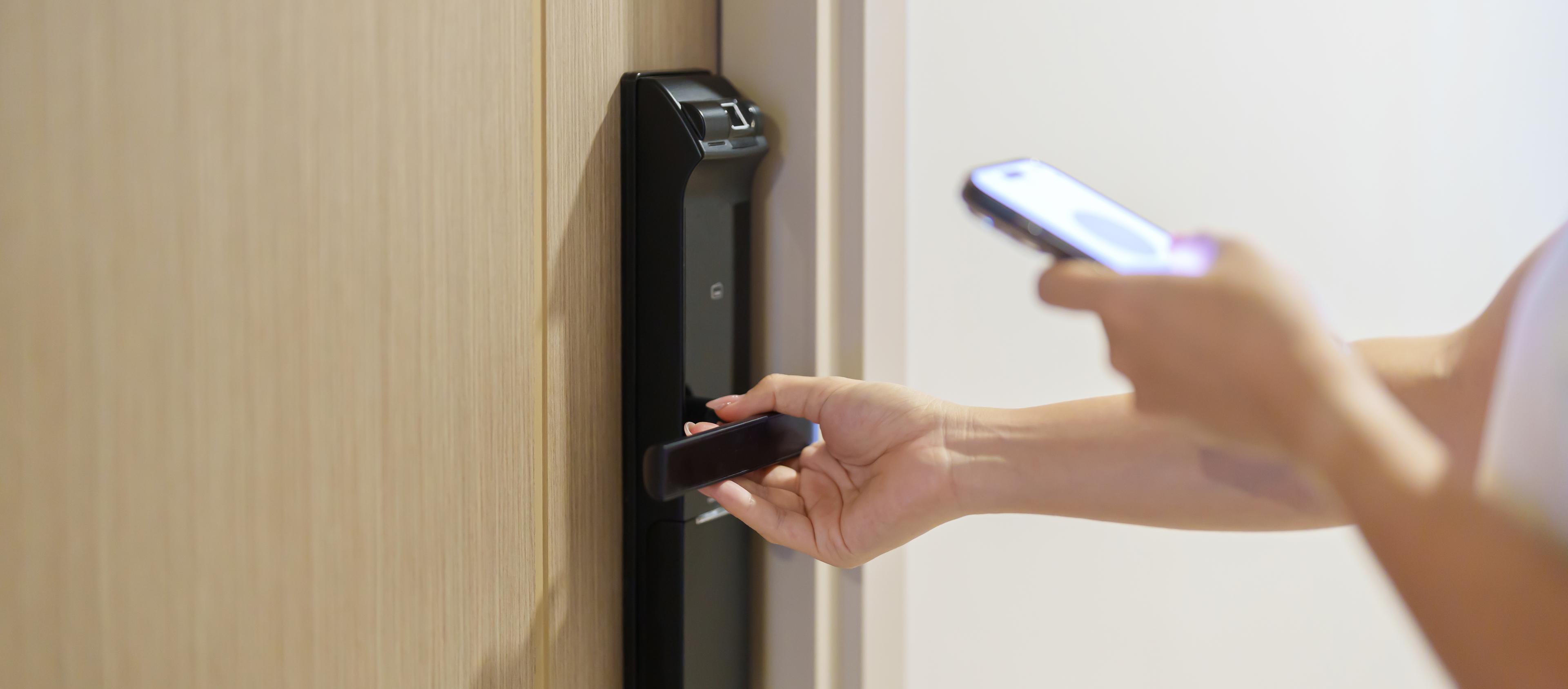
Smart door lock
5–20 MB
Status updates, access events
Self-check-in kiosk
50–250 MB
Guest transactions, software updates
Digital signage
100–500 MB
Content updates, remote management
Occupancy sensor
10–50 MB
Environmental monitoring, occupancy reporting
Device type
Typical monthly data
Smart door lock
5–20 MB
Self-check-in kiosk
50–250 MB
Digital signage
100–500 MB
Occupancy sensor
10–50 MB
Smart door lock
Self-check-in kiosk
Digital signage
Occupancy sensor

Ranges are typical for European and North American deployments Simbase observes in production. Actual usage depends on OCPP implementation, telemetry cadence, and what's bundled with the charger (screen, camera, payment, DCS). Numbers should be validated against your own telemetry before committing to a plan.

Where hospitality connectivity falls short

Three connectivity challenges that impact guest experiences

Every disconnected device affects the guest journey

From digital check-in kiosks to smart room technology, even brief connectivity interruptions can impact guest satisfaction and hotel operations.

Managing multiple properties shouldn't mean managing multiple carriers

As hospitality brands expand, maintaining separate connectivity providers, plans, and contracts across locations increases operational complexity.

IT teams need visibility across every property

Without centralized monitoring, identifying connectivity issues across hotels and connected devices becomes time-consuming and difficult to manage.

What Simbase gives you

Connectivity designed for modern hospitality

  • Multi-IMSI · eSIM

    Reliable connectivity for every property

    Automatically connect to supported mobile networks to help guest-facing technology remain online across hotels, resorts, and hospitality venues, ensuring reliable connectivity for every guest interaction.

  • Visibility across every connected property

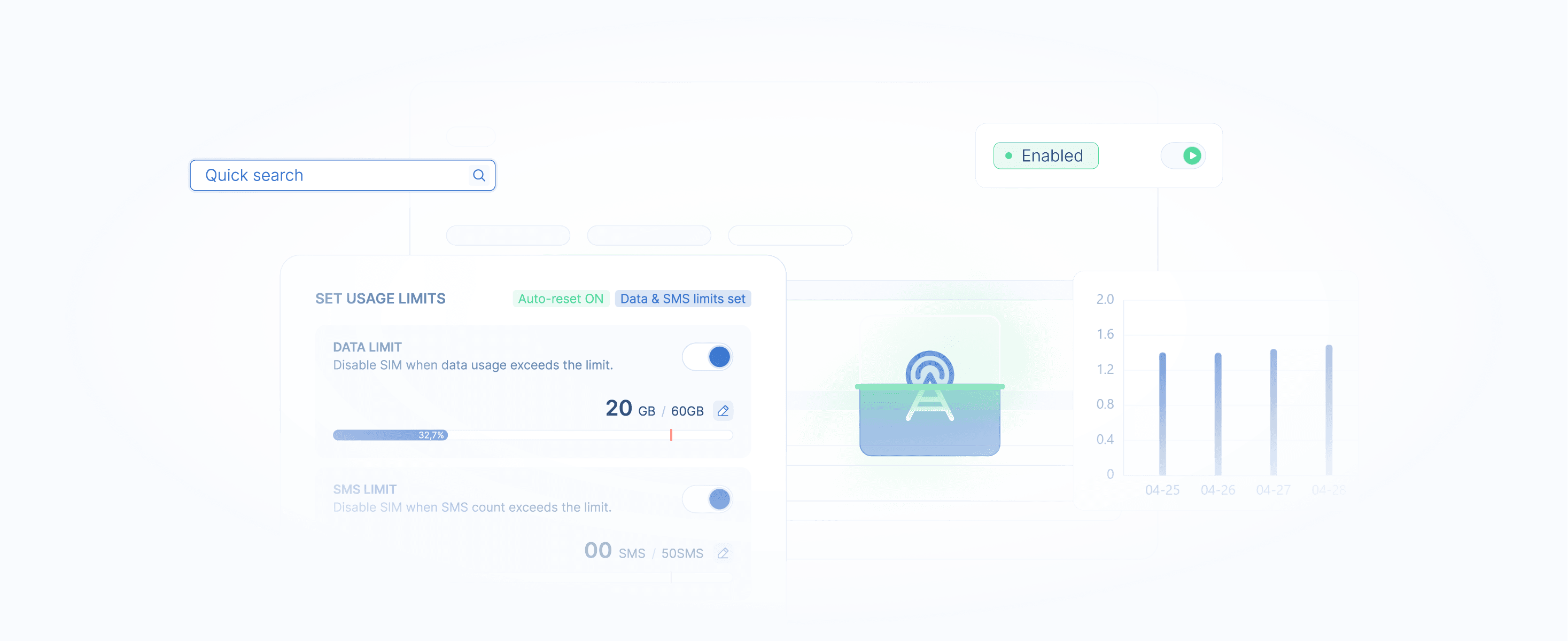
    Monitor SIM status, data usage, and connectivity across smart locks, kiosks, digital signage, and other connected hotel systems from one centralized dashboard.

  • API · Webhooks

    Integrate connectivity into your hotel systems

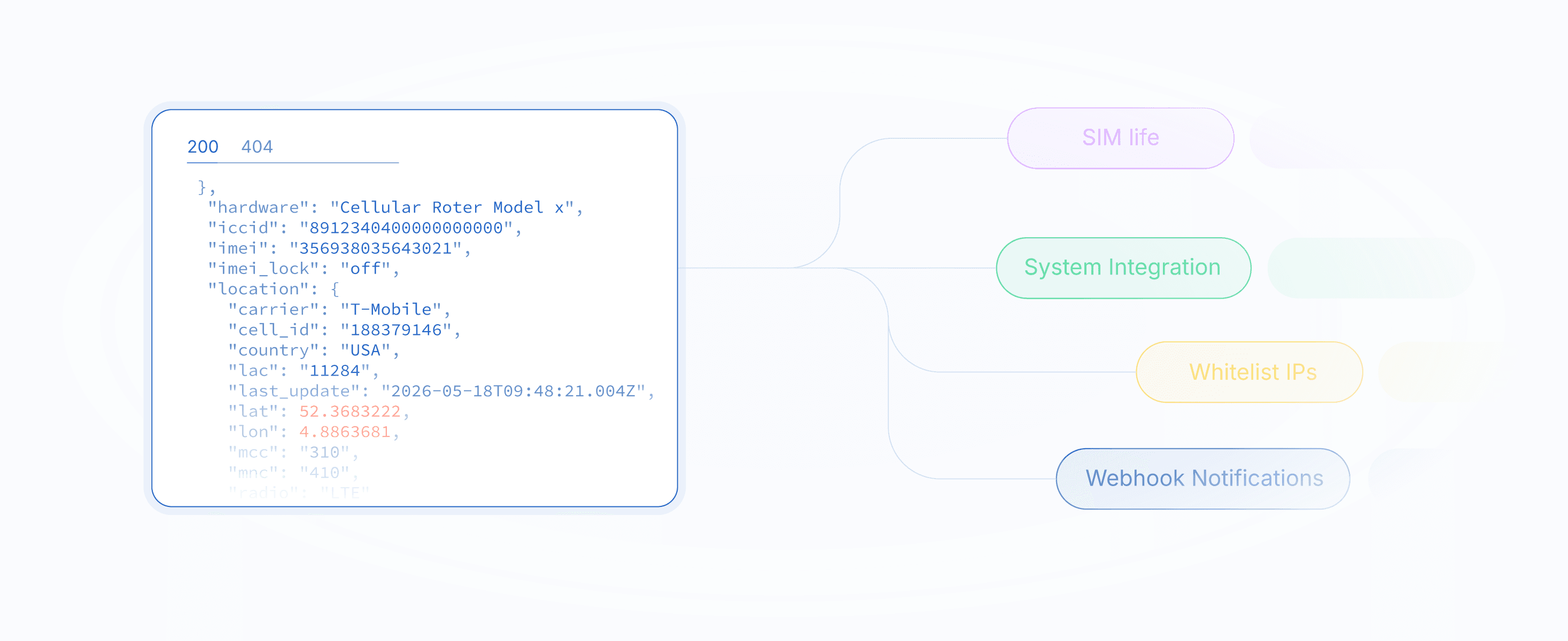
    Automate provisioning, monitor connectivity, and integrate SIM management into your property management systems and operational workflows using APIs and webhooks.

  • Flexible pricing that grows with your portfolio

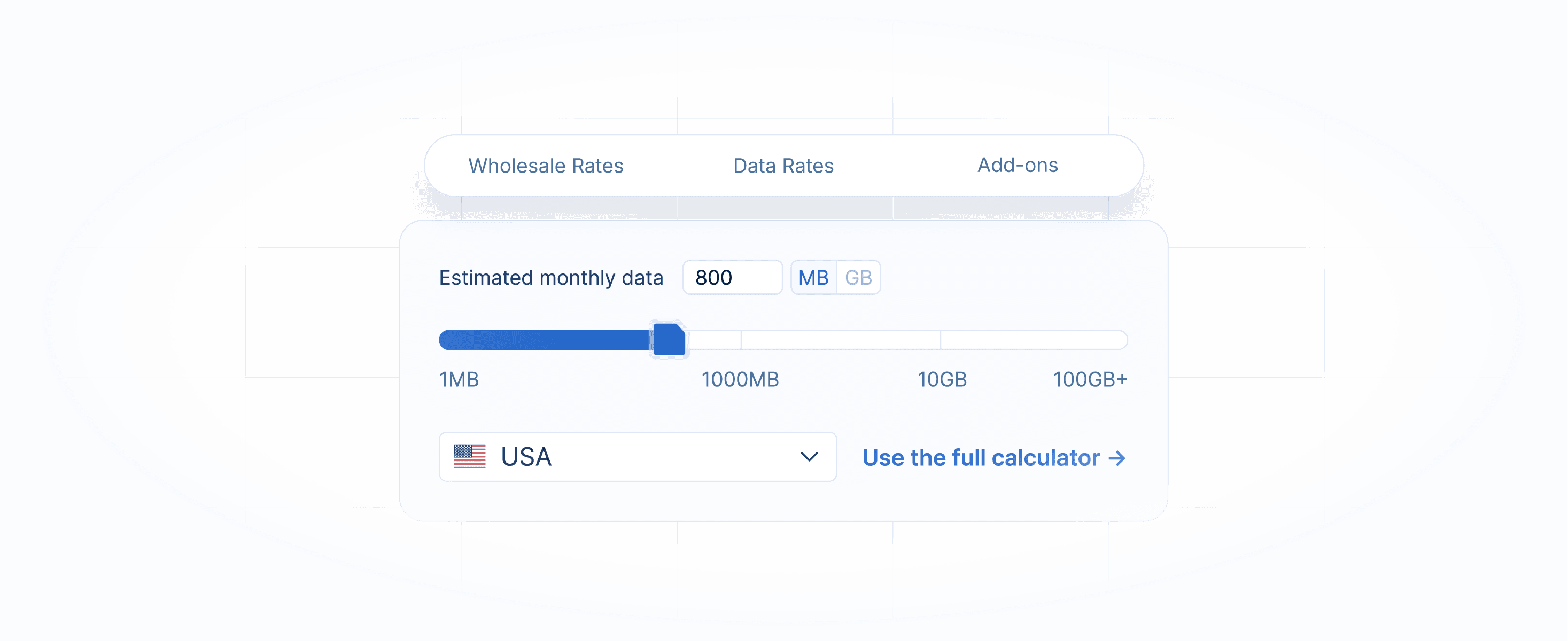
    Scale from a single property to hundreds of locations with flexible pricing, no long-term contracts, and no per-SIM monthly minimums, making it easy to grow as your hospitality portfolio expands.

Technical specifications

Built for connected hospitality deployments

Form factors
Available in plastic SIM (2FF, 3FF, 4FF), industrial MFF2, and eSIM (eUICC) for guest-facing devices, kiosks, gateways, and embedded hotel technology.
Global connectivity
Multi-IMSI connectivity across partner mobile networks in more than 180 countries to support hospitality deployments worldwide.
Network support
Supports 2G, 3G, 4G LTE, LTE-M, NB-IoT, and 5G across a wide range of connected hospitality devices.
APIs & integrations
Automate provisioning, monitor connectivity, and integrate with hotel management platforms through REST APIs, webhooks, and a centralized dashboard.
Network options
Dynamic IPv4 by default, with Static IP, IPv6, Private APN, and VPN options available for enhanced network security.
Security & compliance
GDPR-compliant with EU-based data processing. Enterprise security options are available for organizations with additional compliance requirements.
Deployment
Deploy SIMs before installation or activate devices during rollout through the Simbase platform or API. Bulk provisioning supports multi-property deployments.
Compare approaches

How hospitality connectivity options compare

Features
Features
Simbase
Local MNO contract
Multi-network connectivity
Multi-IMSI across supported partner networks
Typically limited to one carrier per country
Multi-property deployments
One platform across every location
Multiple plans or providers may be required
Device management
Dashboard, REST API, and webhooks
Portal and API capabilities vary
Monthly commitments
No per-SIM monthly minimums
Minimum commitments may apply
Contract flexibility
Month-to-month options available
Longer-term agreements are common
Property visibility
Centralized monitoring across all locations
Visibility varies by carrier and platform
Expansion
Add new hotels from one platform
Additional carrier relationships may be required

Assessments as of 2026, based on publicly advertised plans and feedback from shared prospects. Published for transparency, not to disparage.

For whom

Purpose-built for connected hospitality

  • Hotels & Resorts

    Connected guest experiences.

    Support smart rooms, digital access, guest Wi-Fi infrastructure, and connected services from one connectivity platform.

  • Hotel Management Groups

    Simplify multi-property connectivity.

    Manage connectivity across every hotel from one dashboard while reducing operational complexity.

  • Property Technology Providers

    Connectivity built into your platform.

    Integrate Simbase into your hospitality solutions to automate provisioning, monitor connectivity, and manage deployments through APIs.

  • Smart Building Systems

    Connect every hotel system.

    Support occupancy sensors, HVAC controls, digital signage, environmental monitoring, and other connected building technologies with resilient cellular connectivity.

Glossary

Plain-language terms.

Smart Lock
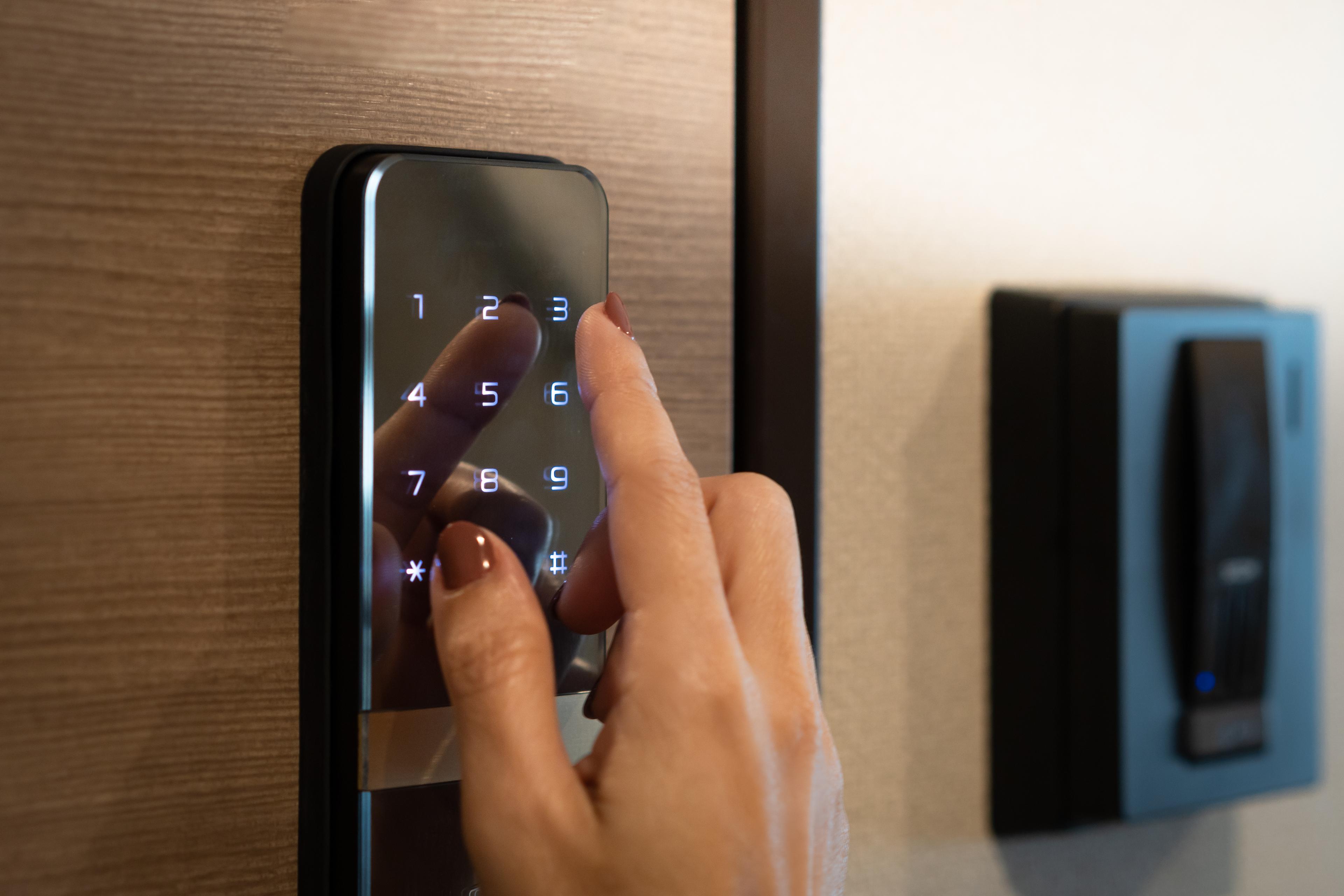
A connected door lock that allows guests to access rooms using digital credentials such as mobile apps, key cards, or PIN codes.
Occupancy Sensor
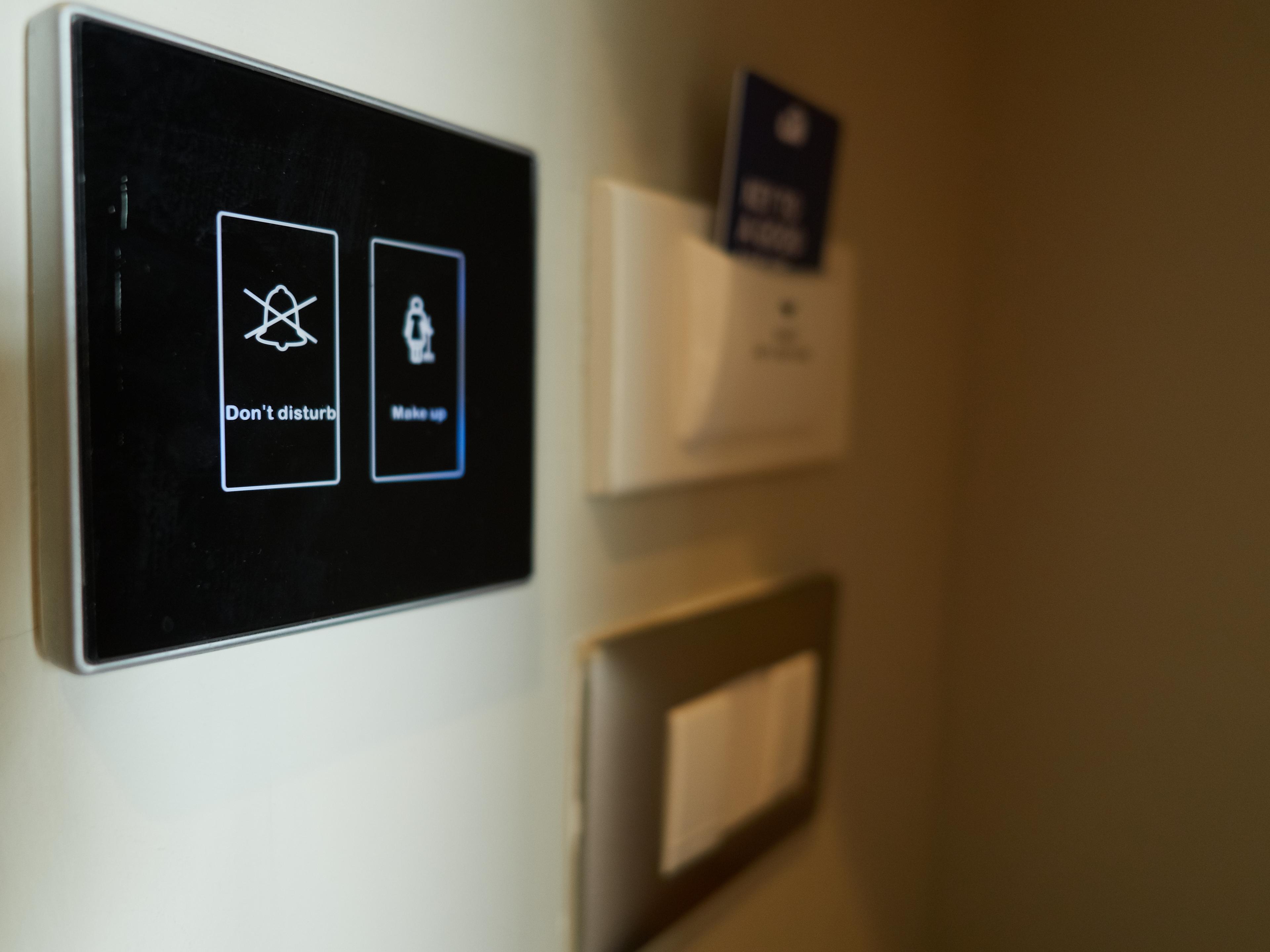
A connected sensor that detects room occupancy to support energy management, housekeeping, and guest comfort.
eSIM / eUICC
An embedded SIM technology that allows network profiles to be remotely downloaded and managed without physically replacing the SIM.
Digital Signage
Connected displays used to deliver guest information, wayfinding, promotional content, and hotel communications that can be managed remotely.
MFF2
A soldered, industrial-grade SIM form factor designed to be permanently embedded into connected devices.
Multi-IMSI
A SIM technology that can access multiple mobile network profiles, helping connected hospitality devices stay connected across supported networks.
Private APN
A private mobile network configuration that provides secure communication between connected devices and business systems.

Frequently Asked Questions

If any of your questions remain unanswered, reach out to our team to answer them for you.

What is an IoT SIM card for hospitality?

An IoT SIM card provides secure cellular connectivity for connected hospitality devices such as smart locks, self-check-in kiosks, occupancy sensors, digital signage, and guest services. Unlike consumer SIMs, IoT SIMs are designed for reliable, long-term deployments with centralized management and remote monitoring.

Can one SIM support hotels in multiple countries?

Yes. Simbase's Multi-IMSI SIMs can connect to supported mobile networks in more than 180 countries, allowing hospitality businesses to deploy the same connectivity solution across multiple properties. This simplifies expansion while reducing the need to manage different carriers and SIMs in every market.

How do I manage connectivity across multiple hotel properties?

The Simbase dashboard provides centralized visibility across every connected property, allowing you to monitor SIM status, data usage, and connectivity from a single platform. APIs and webhooks also make it easy to integrate connectivity management into your existing hotel or IT systems.

Can Simbase connect smart locks and hotel kiosks?

Yes. Simbase supports a wide range of connected hospitality devices, including smart locks, self-check-in kiosks, occupancy sensors, digital signage, environmental monitoring systems, and other IoT-enabled hotel technology that relies on cellular connectivity.

How secure is cellular connectivity for hospitality devices?

Simbase offers enterprise-grade security features, including Private APNs, Static IP options, VPN connectivity, and encrypted communications to help protect connected devices and business systems. These options support secure deployments across multiple hotel properties while helping safeguard operational data.

Which hospitality devices are supported?

Simbase works with a broad range of hospitality IoT devices, including smart locks, kiosks, digital signage, occupancy sensors, HVAC controllers, gateways, guest service terminals, and other embedded devices that use cellular connectivity.

Do hotels need Wi-Fi or cellular connectivity for IoT devices?

Many hospitality devices rely on Wi-Fi, but cellular connectivity provides an independent connection that can simplify deployment, support remote locations, and keep critical systems online without relying solely on the property's network infrastructure. Many organizations use cellular connectivity alongside Wi-Fi to improve resilience and operational flexibility.

get started image

Keep every room, device, and experience connected.

Connect every property, support seamless guest experiences, and manage every connected device from one platform.