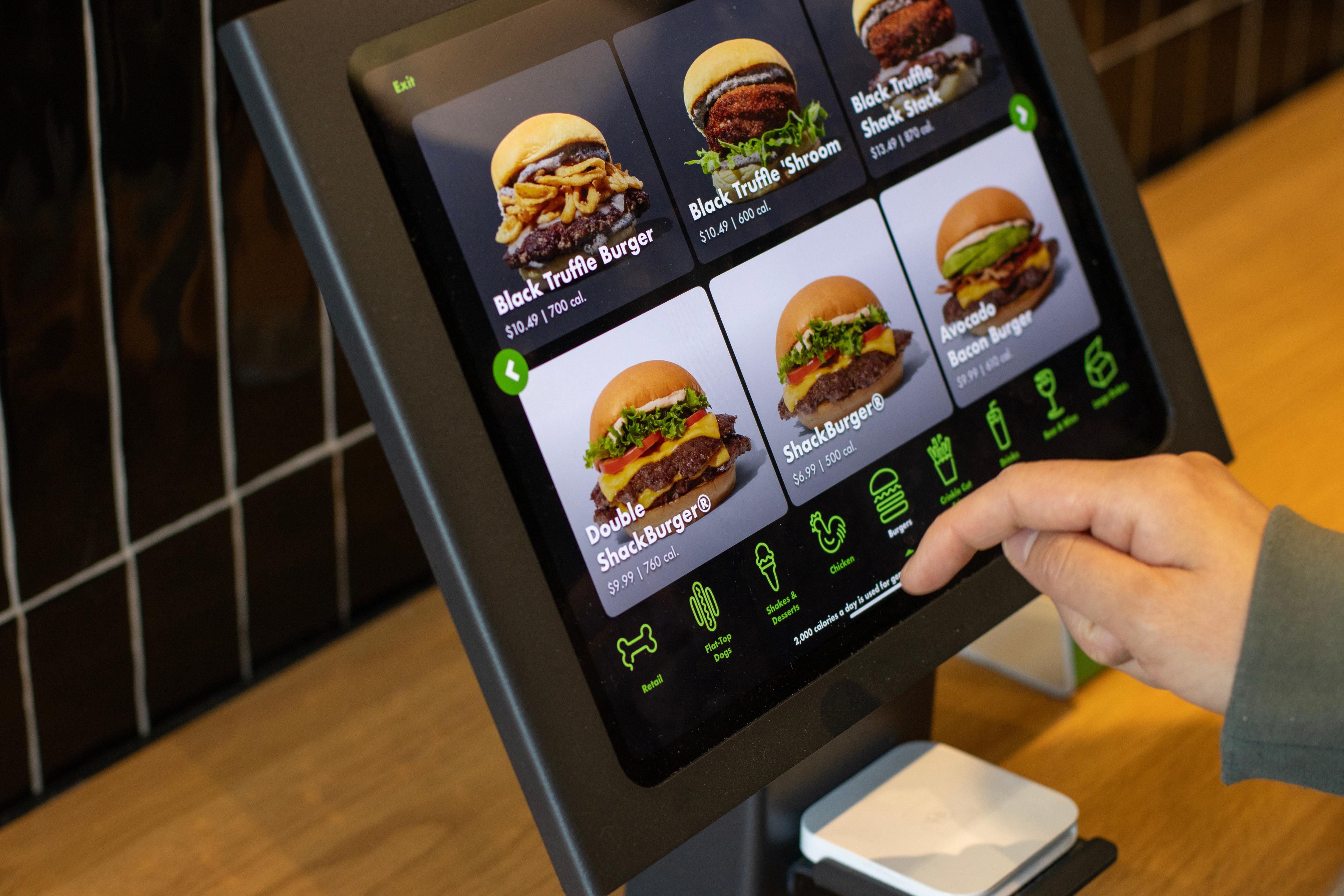
Reliable IoT Connectivity for Retail

Deliver seamless customer experiences by keeping payment terminals, self-checkout kiosks, digital signage, and other connected retail devices online. Deploy faster, reduce downtime, and manage every location from one platform.

  • One SIM icon

    One SIM

    180+ countries · multi-network fallback

  • Form factor icon

    Any form factor

    2FF, 3FF, 4FF, MFF2, eSIM (eUICC)

  • Protocol icon

    Any protocol

    OCPP 1.6 · OCPP 2.0.1 · MQTT · TLS

  • Scale icon

    Any scale

    No per-SIM monthly minimums

The data reality

How much data does a connected retail device actually use?

Not every retail device has the same connectivity requirements. A payment terminal processes transactions all day, while digital signage downloads media, smart shelves report inventory, and kiosks synchronize customer interactions. Understanding how these devices consume data helps retailers choose the right connectivity strategy for every deployment. Here's what we typically see across retail environments.

Device type
Typical monthly data
What drives the usage
Payment Terminal (POS)
100–500 MB
Card transactions, payment processing, receipts
Self-Checkout Kiosk
500 MB–3 GB
Transactions, software updates, customer interactions
Digital Signage
2–10 GB+
Media downloads, scheduled content updates
Smart Locker
100–500 MB
Order notifications, access events, remote monitoring
Inventory Scanner
250 MB–1 GB
Barcode scans, inventory synchronization
Smart Shelf / IoT Sensor
20–100 MB
Inventory reporting, environmental monitoring
Device type
Typical monthly data
Payment Terminal (POS)
100–500 MB
Self-Checkout Kiosk
500 MB–3 GB
Digital Signage
2–10 GB+
Smart Locker
100–500 MB
Inventory Scanner
250 MB–1 GB
Smart Shelf / IoT Sensor
20–100 MB
Payment Terminal (POS)
Self-Checkout Kiosk
Digital Signage
Smart Locker
Inventory Scanner
Smart Shelf / IoT Sensor

Ranges are typical for European and North American deployments Simbase observes in production. Actual usage depends on OCPP implementation, telemetry cadence, and what's bundled with the charger (screen, camera, payment, DCS). Numbers should be validated against your own telemetry before committing to a plan.

Where retail connectivity falls short

Three connectivity challenges that interrupt the customer experience

When checkout stops, so do sales

A lost connection at a payment terminal or self-checkout kiosk can interrupt transactions, create long lines, frustrate customers, and result in lost revenue.

Scaling retail shouldn't mean managing more carriers

As retailers expand into new stores, regions, or countries, managing multiple carriers, contracts, invoices, and support teams quickly becomes an operational burden.

Finding the problem shouldn't take longer than fixing it

When a retail device goes offline, it's not always clear whether the issue is the SIM, the cellular network, the hardware, or the application. Without visibility, troubleshooting takes longer and operations are disrupted.

What Simbase gives you

Built around how retailers deploy and manage devices

  • Multi-IMSI · eSIM

    Deploy once. Scale everywhere.

    Roll out payment terminals, kiosks, and connected retail devices across new stores and markets using one SIM strategy with access to supported carrier networks.

  • Know what's happening at every location.

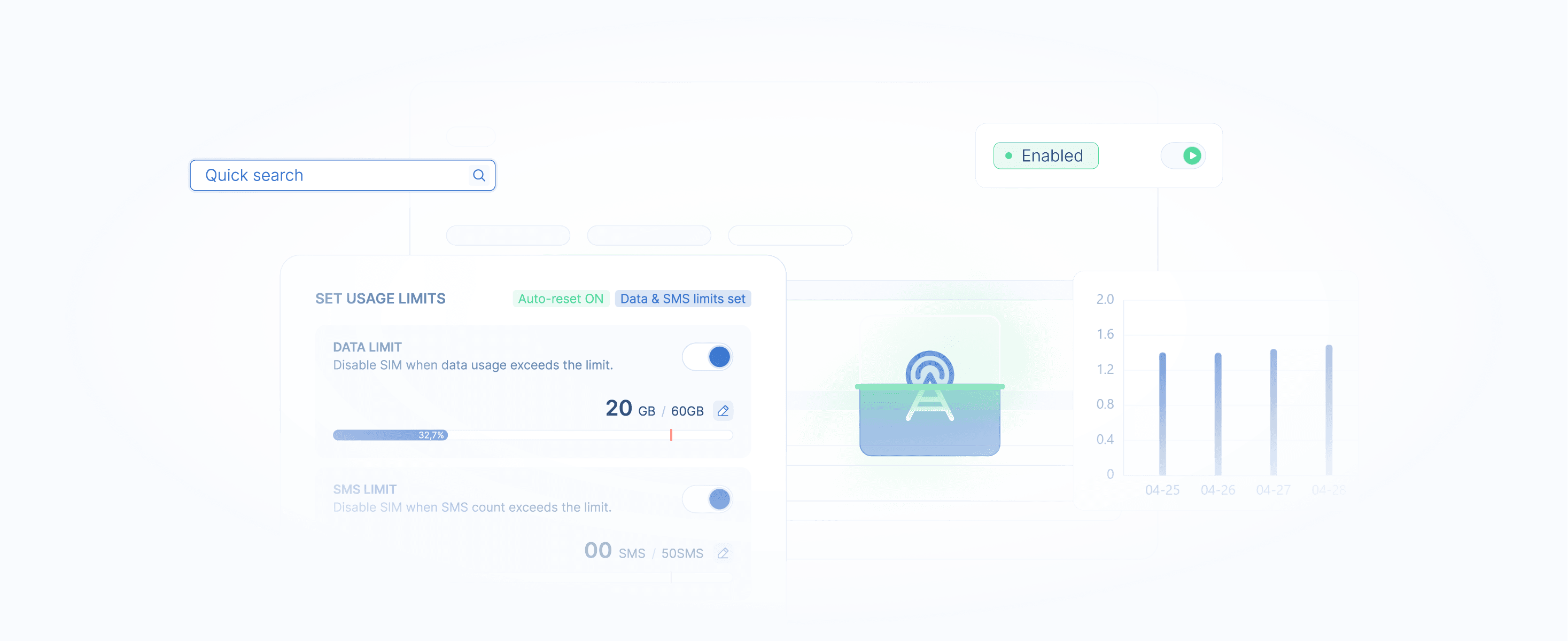
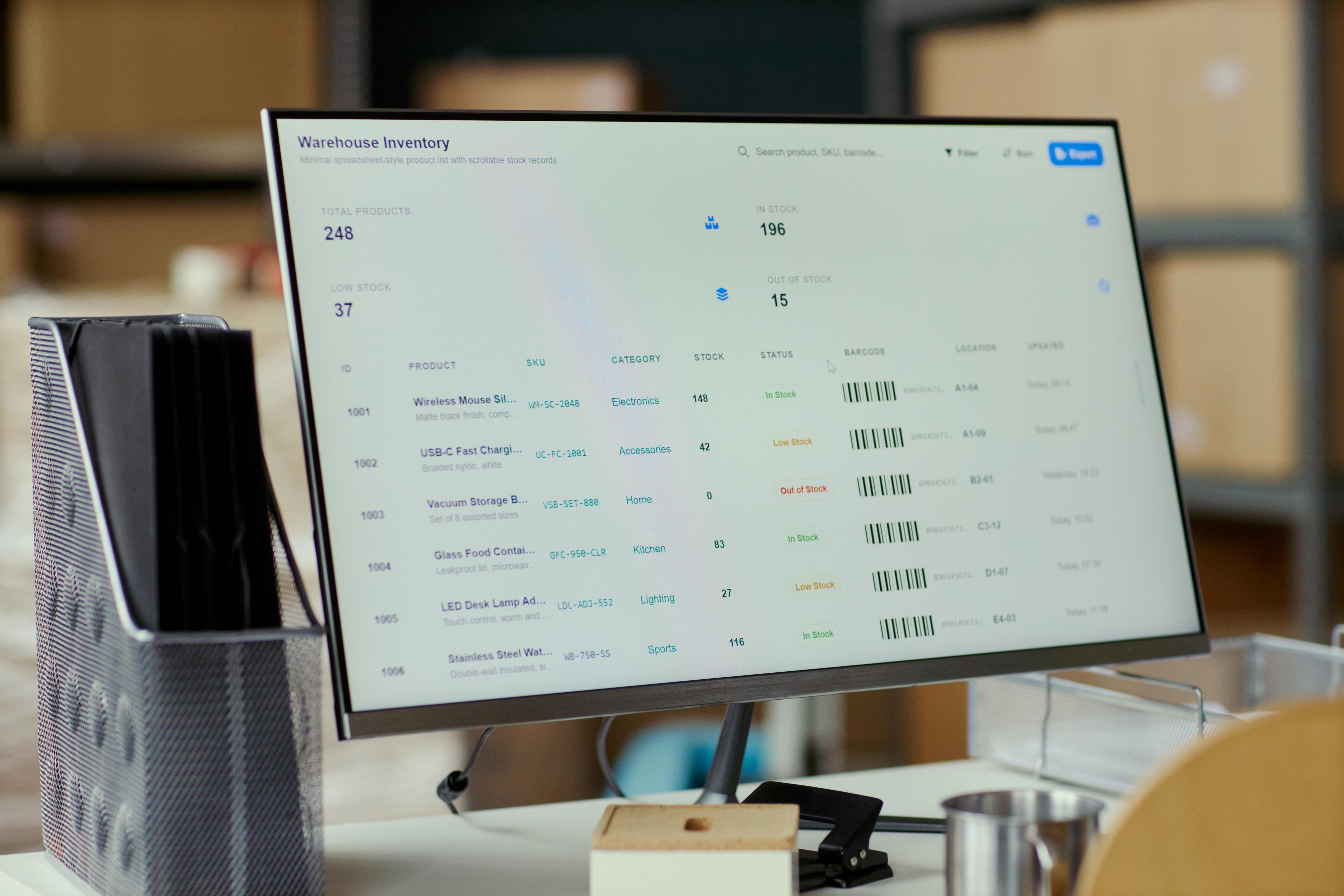
    Monitor payment terminals, self-checkout kiosks, digital signage, and other connected retail devices from one centralized dashboard with real-time status, data usage, and connectivity insights across every store.

  • API · Webhooks

    Automate retail connectivity.

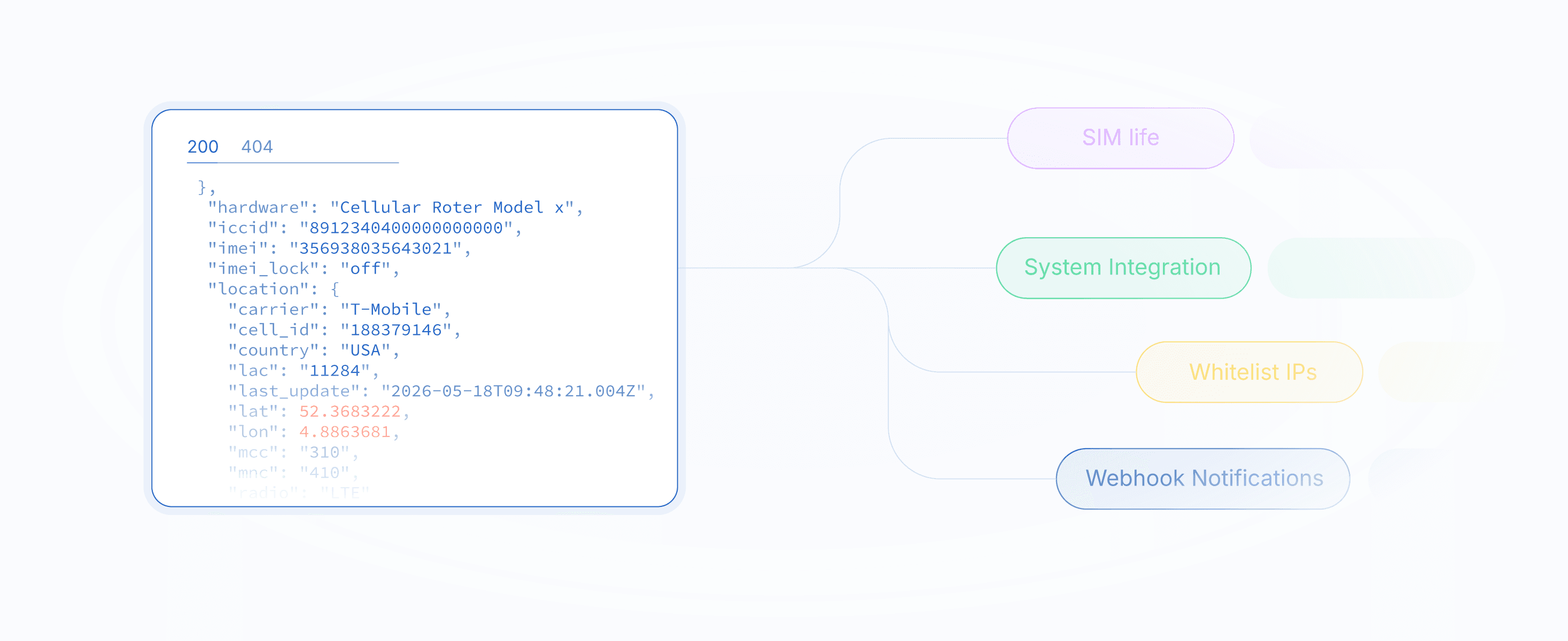
    Integrate Simbase with your POS platform, monitoring tools, or internal systems to automate device provisioning, connectivity alerts, and SIM management while streamlining retail operations across your deployment.

  • Built for changing retail footprints.

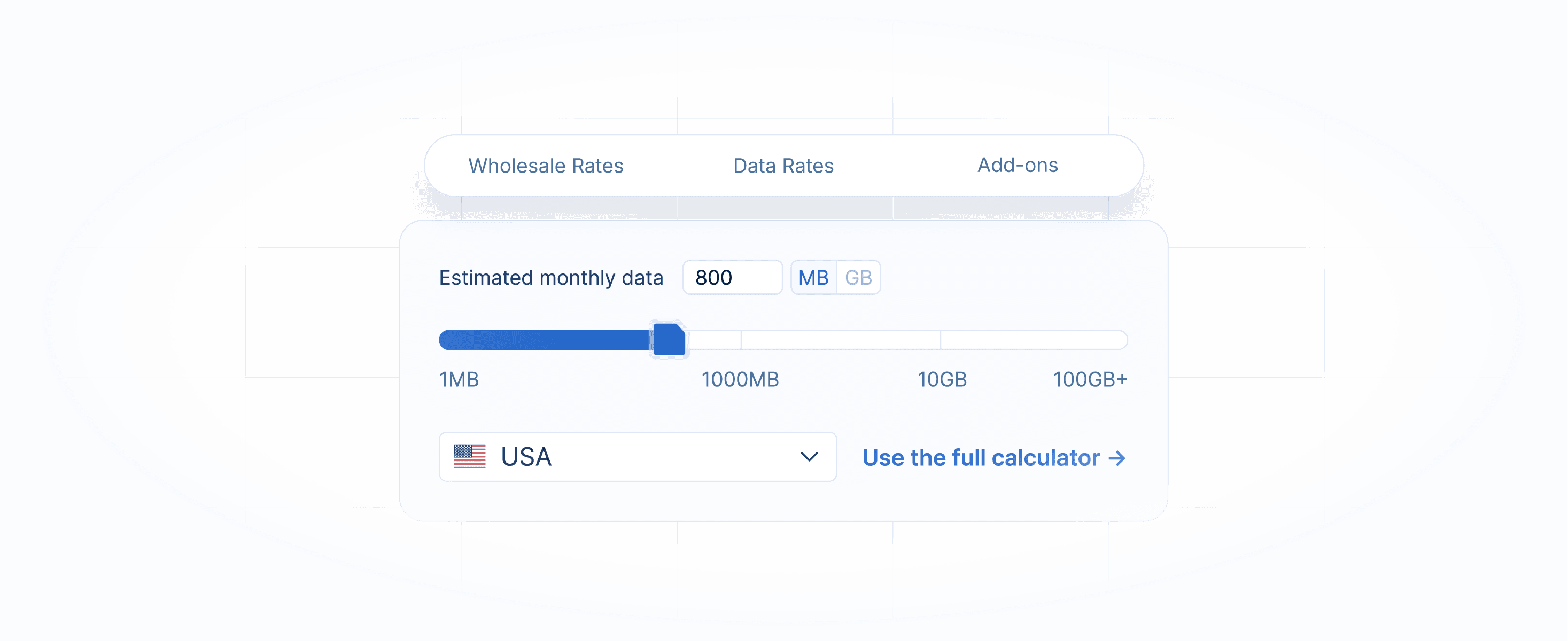
    Whether you're opening new stores, supporting seasonal locations, or replacing devices, flexible pricing helps you scale without long-term carrier commitments.

Technical specifications

Built for connected retail deployments

Global connectivity
Multi-IMSI connectivity across partner mobile networks in more than 180 countries, with automatic network switching where supported to help maintain reliable service.
Network support
Supports 2G, 3G, 4G LTE, LTE-M, NB-IoT, and 5G, providing compatibility across a wide range of connected retail devices.
APIs & integrations
Manage SIMs, automate provisioning, and integrate connectivity into retail platforms using REST APIs, webhooks, and a centralized dashboard.
Network options
Dynamic IPv4 by default, with Static IP, IPv6, Private APN, and VPN options available for deployments requiring additional security or network control.
Security & compliance
GDPR-compliant with EU-based data processing. Data residency options and enterprise security features are available for organizations with specific compliance requirements.
Deployment
Order SIMs ready for installation or activate devices during deployment through the Simbase platform or API. Bulk provisioning simplifies large-scale retail rollouts.
Compare approaches

How retail connectivity options compare.

Features
Features
Simbase
Local MNO contract
Multi-network per country
Multi-IMSI access across supported partner networks
Typically tied to one carrier per country
Global deployment
One SIM strategy across multiple markets
Separate SIMs, plans, or agreements may be required by country
Management and integrations
Self-service dashboard, REST API, and webhooks
Portal and API capabilities vary by carrier
Monthly commitments
No per-SIM monthly minimums
Minimum commitments may apply
Contract flexibility
Month-to-month options available
Longer-term agreements are common
Deployment visibility
Centralized status, usage, and connectivity insights
Visibility varies by carrier and market
Scaling across locations
Manage multiple stores and device types from one platform
Expansion may require additional carrier relationships and processes

Assessments as of 2026, based on publicly advertised plans and feedback from shared prospects. Published for transparency, not to disparage.

For whom

Wherever work happens, connectivity has to follow.

  • Payment Solution Providers

    Deliver reliable checkout experiences

    Keep payment terminals connected with resilient, multi-network cellular connectivity designed to support secure, uninterrupted customer transactions.

  • Self-Service & Kiosks

    Reduce downtime where customers interact

    Support self-checkout, ordering, ticketing, and information kiosks with reliable connectivity that can be remotely monitored and managed across every location.

  • Smart Retail Technology

    Power connected retail experiences

    Connect smart shelves, lockers, digital signage, inventory systems, and other in-store technologies through one centralized connectivity platform.

  • Retail Chains

    Simplify connectivity across every store

    Deploy and manage connectivity for payment terminals, kiosks, digital signage, and other retail devices across multiple locations from one centralized platform.

Glossary

Plain-language terms.

Point of Sale (POS)
A system used to process customer purchases, including payment terminals, checkout software, and connected retail devices.
Self-Checkout
A customer-operated checkout station that allows shoppers to scan items, pay for purchases, and complete transactions without cashier assistance.
Digital Signage
Connected displays used to deliver promotional content, menus, wayfinding, pricing, or real-time information that can be managed remotely.
eSIM / eUICC
An embedded or programmable SIM that can be remotely activated, updated, or switched between mobile network profiles without replacing the physical SIM.
Smart Locker
A connected locker system that enables secure package pickup, click-and-collect orders, returns, and controlled access through software.
Private APN
A private cellular network configuration that securely routes data between connected devices and your organization's systems.
MFF2
A solderable industrial SIM form factor designed for embedded devices that require long-term durability and reliable connectivity.
Multi-IMSI
A SIM technology that provides access to multiple mobile network profiles, helping devices maintain connectivity by switching to supported carrier networks when needed.
Cellular Failover
A backup cellular connection that automatically takes over if a primary wired or Wi-Fi connection becomes unavailable, helping keep critical systems online.
Static IP
A fixed IP address assigned to a SIM or device, making it easier to securely access, monitor, and manage connected equipment remotely.

Frequently Asked Questions

If any of your questions remain unanswered, reach out to our team to answer them for you.

Can Simbase provide backup connectivity if Wi-Fi fails?

Yes. Cellular connectivity can be used as a primary or failover connection to help keep critical retail systems online when fixed internet connections become unavailable.

Can I manage connectivity across multiple store locations?

Yes. The Simbase dashboard and API allow you to manage connectivity across stores, regions, customers, and deployments from one centralized platform.

Does Simbase support international retail deployments?

Yes. Simbase provides connectivity across more than 180 countries, making it easier to standardize deployments across global retail operations.

Can Simbase work with my existing payment terminals and retail devices?

In many cases, yes. Simbase supports a wide range of connected retail devices, including payment terminals, self-checkout kiosks, digital signage, smart lockers, and other cellular-enabled equipment.

Can I use the same SIM strategy across multiple countries?

Yes. With Multi-IMSI connectivity and global coverage, retailers can simplify international deployments using one connectivity platform rather than managing separate carrier relationships in each country.

Can Simbase integrate with my existing retail systems?

Yes. Simbase offers a centralized dashboard, REST APIs, and webhooks that integrate with POS platforms, monitoring tools, asset management systems, and other business applications.

What happens if a device goes offline?

The Simbase dashboard provides real-time connectivity insights to help identify whether an issue is related to the SIM, network, or device, allowing your team to troubleshoot more efficiently.

get started image

Keep every store connected. Keep every sale moving.

From payment terminals and kiosks to digital signage and smart retail technology, Simbase delivers resilient connectivity that helps retailers reduce downtime, simplify operations, and scale with confidence.