


 Zurück zu den Fallstudien
How Orbisk Scaled Globally While Cutting Connectivity Costs by 40%
Kosten senken, Bereitstellungen vereinfachen und mit einer einzigen globalen Konnektivitätslösung neue Märkte erschließen
Über Orbisk
Lebensmittelabfälle in datengestützte Entscheidungen umwandeln
Orbisk ist ein in den Niederlanden ansässiges KI-Unternehmen, das Großküchen dabei unterstützt, Lebensmittelabfälle um bis zu 70 % zu reduzieren. Das automatisierte System zur Überwachung von Lebensmittelabfällen nutzt eine integrierte Smart-Kamera und eine Waage, um alle weggeworfenen Lebensmittel zu erfassen, ohne dass eine manuelle Eingabe durch das Personal erforderlich ist.
Durch die Kombination von maschinellem Lernen und Echtzeit-Datenerfassung liefert Orbisk Betreibern im Gastgewerbe die Erkenntnisse, die sie benötigen, um Kosten zu senken, die Bestellung zu optimieren und nachhaltiger zu wirtschaften.
Ihre Geräte kommen bereits weltweit in Restaurants, auf Kreuzfahrtschiffen, in Hotels und in Großküchen zum Einsatz und sind für ihren Betrieb auf eine nahtlose globale Vernetzung angewiesen.
Die Herausforderung
Skalierung von KI-Geräten mit globaler Reichweite, aber lokaler Komplexität
Als Orbisk nach Nordamerika und in den Nahen Osten expandierte, stieß das Unternehmen auf bekannte Herausforderungen, mit denen viele IoT-Implementierungen zu kämpfen haben:
Steigende Kosten für Mobilfunkverbindungen in verschiedenen Regionen
Zersplitterte SIM-Verwaltung und uneinheitliche Unterstützung durch die verschiedenen Anbieter
Verzögerte Markteinführungen aufgrund technischer Unvereinbarkeiten in neuen Märkten
Sie brauchten einen zuverlässigen Anbieter von IoT-Konnektivitätslösungen die ihre globale Strategie unterstützen, die Abläufe vereinfachen und Kostenineffizienzen beseitigen könnten.
Die Simbase-Lösung
Eine skalierbare, globale IoT-SIM-Plattform, die speziell für moderne Einsatzszenarien entwickelt wurde
Was als kleines Pilotprojekt begann, entwickelte sich schnell zu einer vollständigen Migration auf Simbase. Orbisk verglich zunächst die SIMs von Simbase mit denen seines bisherigen Anbieters, und die Ergebnisse sprachen für sich.
Die Simbase-Lösung:
Eine globale SIM-Plattform mit Unterstützung für mehrere Regionen
Echtzeit-Steuerung über ein zentrales IoT-Dashboard
Transparente, nutzungsabhängige Preisgestaltung ohne Verträge oder versteckte Gebühren
„Orbisk wandte sich mit einem klaren Anliegen an uns: globale Bereitstellungen zu vereinfachen und Kosten zu senken. Wir wussten, dass wir beides – und noch mehr – leisten konnten.“
— Roel van der Meer, Geschäftsführer, Simbase
Im Zuge des Wachstums von Orbisk hat Simbase das Unternehmen vom Standard-Tarif auf den Global Business-Tarif umgestellt und damit erweiterten Support sowie mehr Flexibilität für den IoT-Einsatz mit hohem Datenaufkommen ermöglicht.
Gemeinsam:
Die technischen und geografischen Anforderungen für die Expansion wurden bewertet
Optimierte Einführungsprozesse in Küchen weltweit
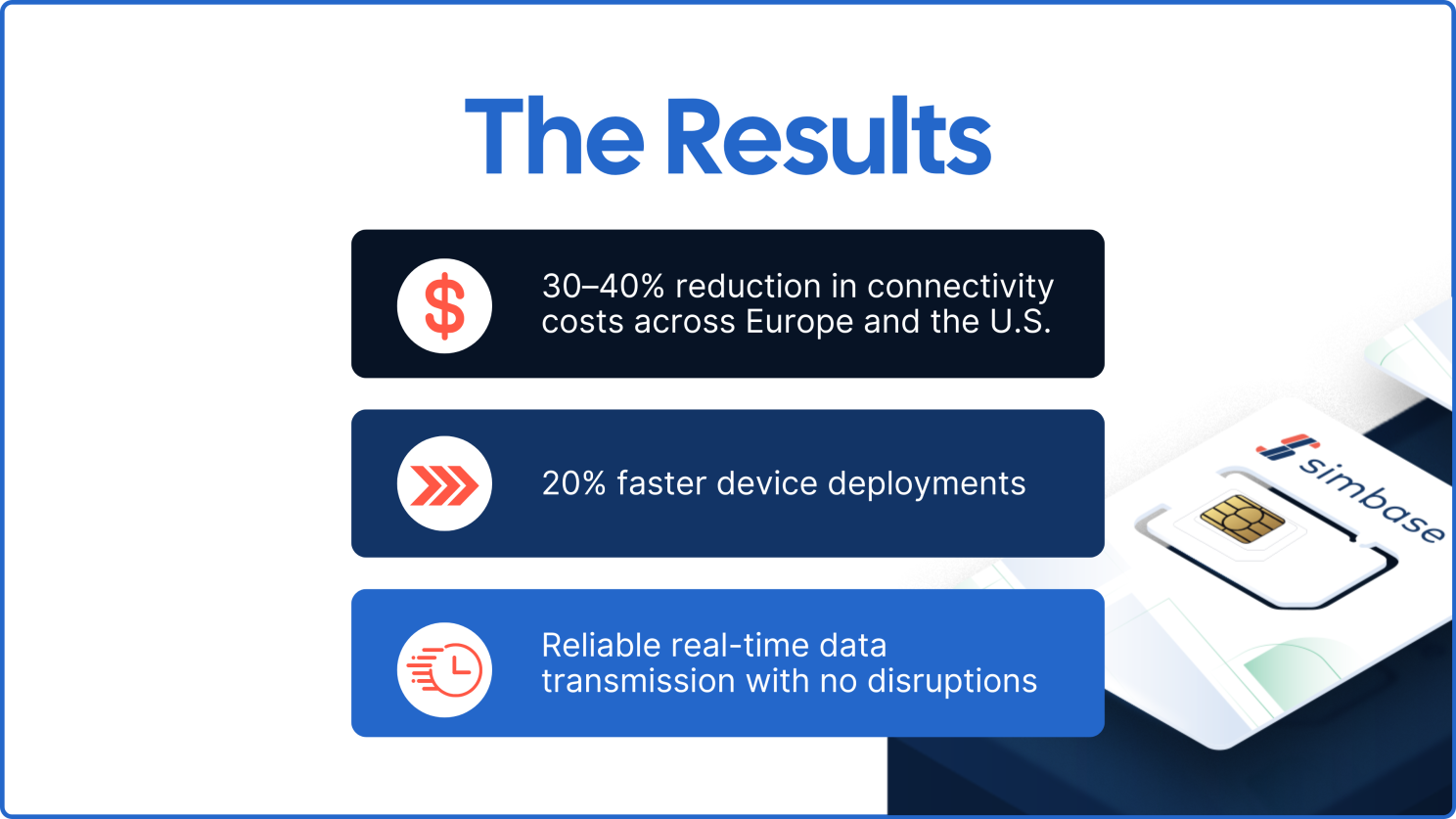
Gewährleistete zuverlässige Datenübertragung in Echtzeit ohne Ausfälle
Die Auswirkungen
Bessere Leistung, geringere Kosten und schnellere Skalierung
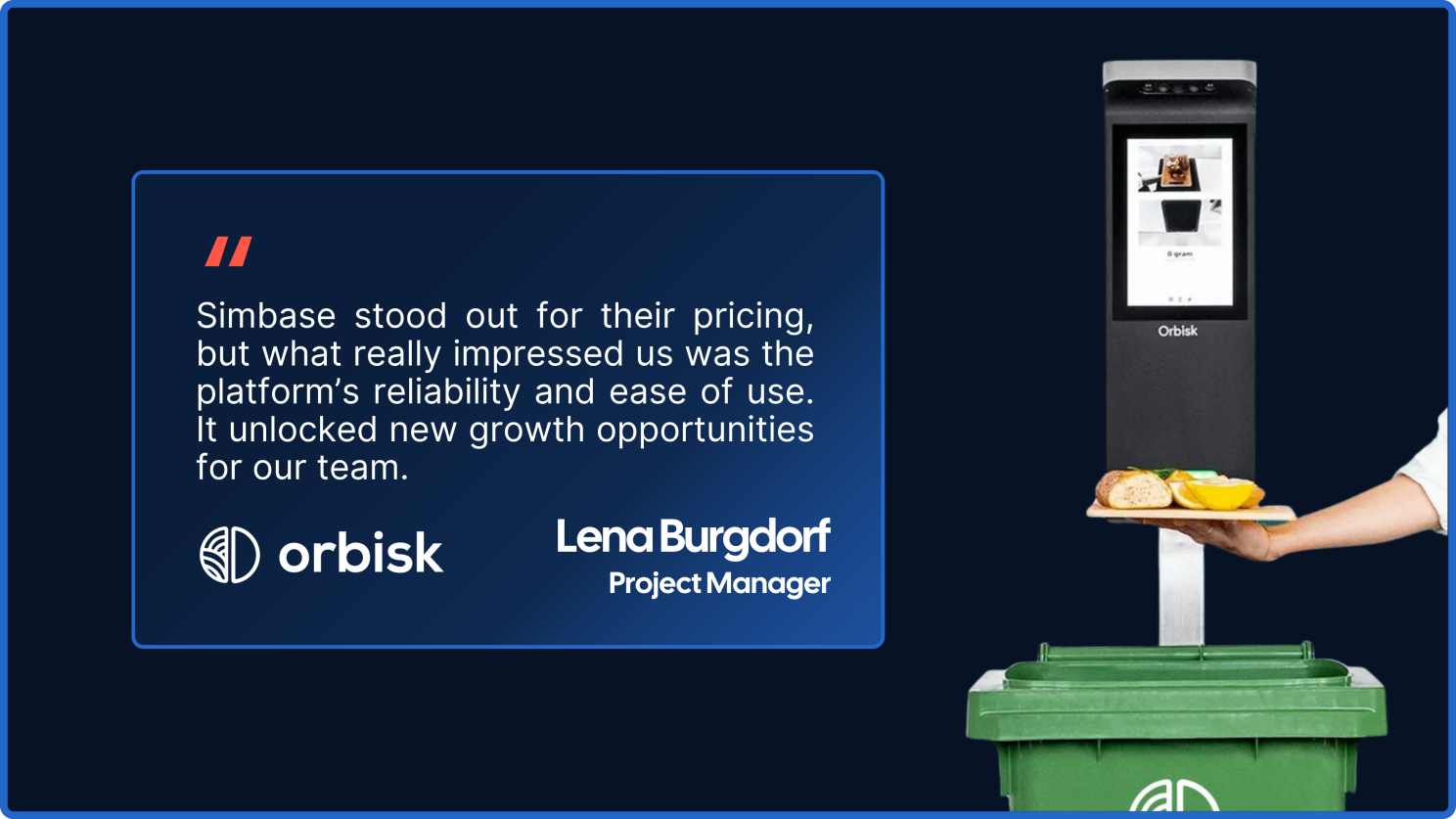
„„Anfangs hat uns Simbase vor allem durch seine wettbewerbsfähigen Preise überzeugt, doch als wir die Lösung getestet haben, haben wir festgestellt, wie benutzerfreundlich sie ist und wie einwandfrei sie funktioniert. Sie hat uns neue Möglichkeiten für eine globale Expansion eröffnet, und das Simbase-Team hat uns hervorragend unterstützt, sodass der gesamte Prozess reibungslos verlief.“
— Lena Burgdorf, Projektleiterin, Orbisk
Wie geht es weiter?
Förderung nachhaltiger Lebensmitteltechnologie in neuen Märkten
Orbisk baut seine KI-gestützte Technologie zur Vermeidung von Lebensmittelabfällen weiterhin in Nordamerika und im Nahen Osten aus. Mit Simbase als globalem Partner für IoT-Konnektivität erschließt das Unternehmen neue Märkte schneller und effizienter als je zuvor.
„Es geht nicht nur um Kosteneinsparungen, sondern darum, die Mission zu ermöglichen. Das ist die Rolle, die wir mit Stolz übernehmen.“
— David Netten, CTO, Simbase
Sind Sie bereit, weltweit zu expandieren, ohne dass die Kosten für die Netzanbindung steigen?
Die Erweiterung Ihrer IoT-Infrastruktur sollte nicht zwangsläufig mit mehr Anbietern, Verträgen oder Komplexität einhergehen. Mit Simbase können Sie die weltweite Konnektivität von einer einzigen Plattform aus verwalten, die Kosten kontrollieren und vernetzte Geräte schneller auf neuen Märkten einführen.
Erfahren Sie, wie Simbase Ihre globale IoT-Konnektivität vereinfachen kann.