Semplifica la connettività su tutti i dispositivi fondamentali per l'azienda

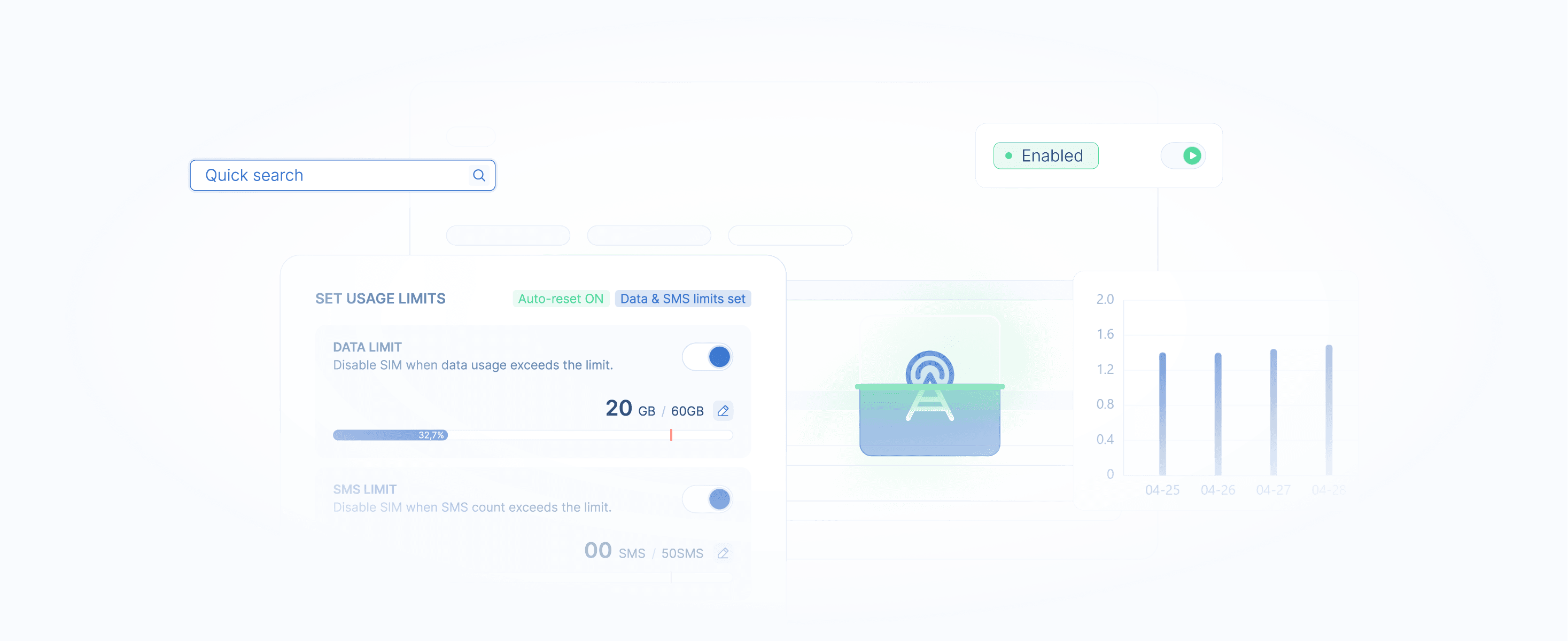
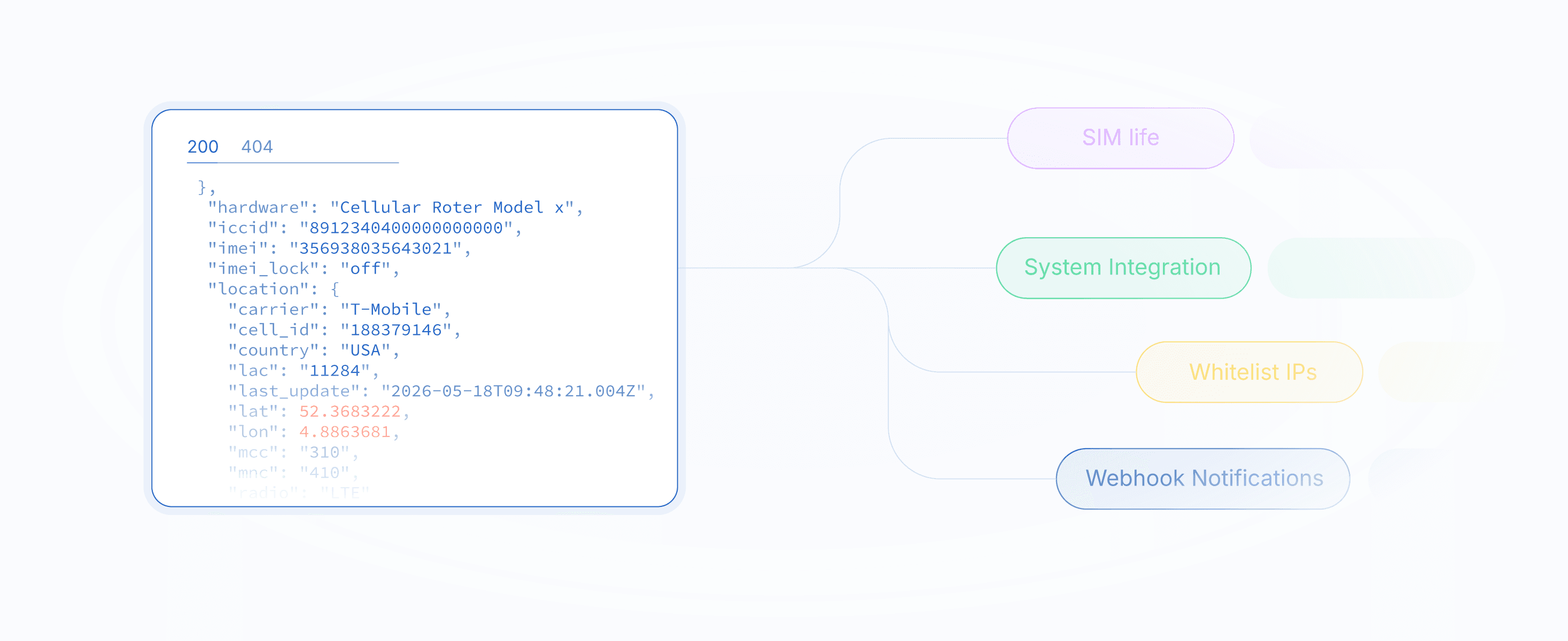
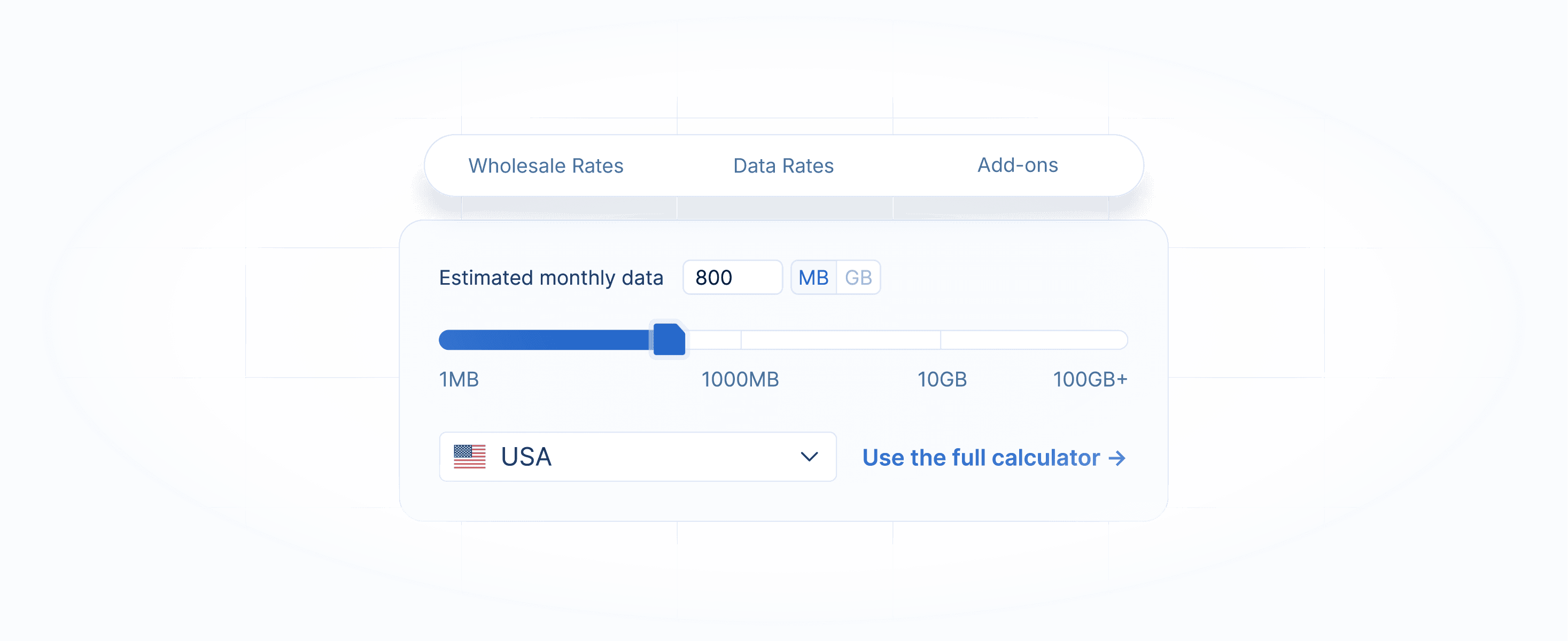
Implementa, gestisci, monitora e automatizza la connettività da un'unica piattaforma. Riduci la complessità dei gestori, ottieni visibilità in tempo reale e mantieni sotto controllo ogni dispositivo connesso.

  • One SIM icon

    Una SIM

    Oltre 180 paesi · fallback su più reti

  • Form factor icon

    Qualsiasi formato

    2FF, 3FF, 4FF, MFF2, eSIM (eUICC)

  • Protocol icon

    Qualsiasi protocollo

    OCPP 1.6 · OCPP 2.0.1 · MQTT · TLS

  • Scale icon

    Qualsiasi scala

    Nessun importo minimo mensile per SIM

La realtà dei dati

Quanti dati consuma effettivamente un dispositivo aziendale?

Le implementazioni di mobilità aziendale raramente presentano requisiti di dati “tipici”. Un laptop utilizzato da un dipendente in remoto, un dispositivo portatile rinforzato per la scansione dell’inventario, un chiosco di vendita al dettaglio che elabora transazioni e il tablet di un tecnico sul campo generano tutti quantità diverse di traffico. L'utilizzo mensile dipende dalle applicazioni in uso, dagli aggiornamenti del sistema operativo e di sicurezza, dalla sincronizzazione con il cloud e dal fatto che la connessione cellulare sia quella principale o funga semplicemente da backup quando il Wi-Fi non è disponibile. Gli esempi riportati di seguito forniscono un punto di partenza generale per la pianificazione delle implementazioni di mobilità aziendale.

Tipo di dispositivo
Dati mensili tipici
Cosa determina l'utilizzo
Field service tablets
500 MB – 5 GB
Field apps, forms, maps, image uploads
Corporate laptops
5–30 GB+
VPN, cloud applications, video meetings, file syncing
Rugged handhelds
100–500 MB
Inventory updates, barcode scans, task synchronization
Retail kiosks
500 MB – 3 GB
Transactions, remote monitoring, software updates
Mobile POS devices
250 MB – 2 GB
Payment processing, receipts, inventory lookups
Tipo di dispositivo
Dati mensili tipici
Field service tablets
500 MB – 5 GB
Corporate laptops
5–30 GB+
Rugged handhelds
100–500 MB
Retail kiosks
500 MB – 3 GB
Mobile POS devices
250 MB – 2 GB
Field service tablets
Corporate laptops
Rugged handhelds
Retail kiosks
Mobile POS devices

Questi intervalli sono tipici delle installazioni europee e nordamericane che Simbase osserva in ambiente di produzione. L'utilizzo effettivo dipende dall'implementazione dell'OCPP, dalla frequenza di trasmissione dei dati di telemetria e dalle funzionalità incluse nel caricatore (display, telecamera, pagamento, DCS). Si consiglia di verificare questi dati confrontandoli con i propri dati di telemetria prima di scegliere un piano.

I limiti della connettività per la mobilità aziendale

Tre sfide legate alla connettività che rallentano le implementazioni aziendali

Complessità dei vettori regionali

L'espansione in nuovi uffici, regioni o paesi comporta spesso la gestione di un altro operatore, di un altro piano tariffario, di un altro processo di assistenza e di un altro sistema di fatturazione. Man mano che le implementazioni crescono, la gestione della connettività diventa sempre più complessa per i team IT.

Visibilità limitata quando i dispositivi si disconnettono

Quando un laptop, un tablet o un dispositivo portatile perde la connessione, il reparto IT deve stabilire rapidamente se il problema sia da attribuire alla rete, alla SIM, al dispositivo o all'utente. Senza gli strumenti diagnostici adeguati, la risoluzione dei problemi diventa un processo manuale che aumenta i tempi di inattività e i costi di assistenza.

L'adattamento delle distribuzioni richiede troppo lavoro manuale

Configurare una manciata di dispositivi è semplice. Implementare centinaia o migliaia di endpoint aziendali, invece, non lo è. Attivare, assegnare, sospendere e reimpostare la connettività tra team distribuiti può trasformarsi rapidamente in un onere operativo in assenza di una gestione centralizzata.

Cosa ti offre Simbase

Un livello di connettività progettato per parchi di dispositivi distribuiti

  • Multi-IMSI · eSIM

    Deploy globally with one SIM strategy.

    Use one SIM or eSIM solution across supported markets with intelligent multi-network connectivity. Simplify regional rollouts, support traveling employees, and reduce the need to source different carriers for every deployment.

  • Manage every device from one platform.

    Provision, suspend, organize, and monitor connectivity across laptops, tablets, rugged handhelds, kiosks, and other enterprise devices. Give IT complete visibility into usage, connectivity status, and diagnostics without logging into multiple carrier portals.

  • API · Webhooks

    Automate connectivity across your IT workflows.

    Integrate Simbase with your existing MDM, UEM, ITSM, or asset management platforms to automate provisioning, lifecycle management, alerts, and connectivity workflows as devices are deployed, reassigned, or retired.

  • Pricing

    Connectivity that scales with your workforce.

    Pay only for the devices that are active. Avoid long-term contracts, inflexible bundles, and unnecessary SIM costs while giving IT predictable, transparent pricing as deployments grow.

Specifiche tecniche

Progettato per implementazioni di mobilità aziendale su larga scala

Form factors
Plastic SIM (2FF, 3FF, 4FF), industrial MFF2, and eSIM (eUICC) to support laptops, tablets, rugged handhelds, kiosks, and embedded enterprise devices.
Global connectivity
Multi-IMSI connectivity across partner mobile networks in 180+ countries with automatic network selection for reliable coverage while users and devices move between regions.
Supported networks
4G LTE and 5G connectivity, with compatibility across a wide range of enterprise-grade laptops, tablets, routers, and rugged mobile devices.
Network management
Centralized dashboard for provisioning, usage monitoring, diagnostics, SIM lifecycle management, and real-time connectivity insights.
API & integrations
REST API (OpenAPI 3.0) and webhooks for integrating connectivity with MDM, UEM, ITSM, asset management, and internal provisioning workflows.
Network options
Dynamic IPv4 by default, with Static IPv4, IPv6, private APN, and IPsec VPN available for deployments requiring secure private networking.
Security & access
Role-based user access, audit logging, and secure API authentication to support enterprise governance and operational control.
Deployment
Pre-provisioned SIMs or API-driven activation, with bulk ordering and flexible deployment workflows for large-scale rollouts.
Compliance
GDPR-compliant data processing with enterprise security controls and regional deployment options available.
Confronta gli approcci

Confronto tra le opzioni di connettività aziendale

Caratteristiche
Caratteristiche
Simbase
Contratto con un operatore di rete mobile locale
Global management
One centralized platform
Separate portals and processes may be required by region
Network access
Multi-network connectivity
Direct access to a single carrier network
Provisioning
Dashboard, API, webhooks, and bulk actions
Often manual or dependent on carrier support
Per-SIM monthly minimum
No per-SIM monthly minimum
Commonly included in enterprise agreements
Contract flexibility
Month-to-month
Longer-term commitments are common
Diagnostics
Real-time connectivity visibility and diagnostics
Visibility varies by carrier and portal

Valutazioni relative al 2026, basate su piani resi pubblici e sui riscontri ricevuti da potenziali clienti comuni. Pubblicate a fini di trasparenza, non con l'intento di screditare.

Progettato per la mobilità aziendale

Connettività per ogni dispositivo fondamentale per l'attività aziendale

  • Field Service Operations

    Connected beyond the office.

    Keep technicians online with rugged tablets, handhelds, and laptops for inspections, work orders, and real-time reporting.

  • Mobile Workforce

    Work securely from anywhere.

    Connect employee laptops and tablets with reliable cellular access to business applications wherever work takes them.

  • Retail & Customer-Facing Devices

    Always-on customer experiences.

    Keep kiosks, mobile POS, and in-store devices connected with centralized monitoring and remote management.

  • Hardware Vendors & MSPs

    Connectivity built into your solution.

    Bundle global cellular connectivity into your hardware or managed service through one platform and API.

Glossario

Termini in linguaggio semplice

Enterprise mobility
The strategy and technology used to securely deploy, manage, and support mobile devices, applications, and connectivity across an organization.
MDM
Software used to enroll, configure, secure, and monitor mobile devices such as laptops, tablets, smartphones, and rugged handhelds.
UEM
A platform that extends device management beyond mobile devices to include laptops, desktops, wearables, and other connected enterprise endpoints.
eSIM / eUICC
A digital SIM that can be remotely provisioned and updated over the air, allowing organizations to activate or switch mobile network profiles without replacing a physical SIM.
Private APN
A private mobile network that isolates enterprise device traffic from the public internet, providing greater security and control over how connected devices communicate.
MFF2
An industrial-grade, soldered SIM designed to be permanently embedded into enterprise devices, offering greater durability and reliability than removable SIM cards.
Multi-IMSI
A SIM technology that stores multiple carrier identities, allowing devices to access supported mobile networks for improved coverage and more reliable connectivity across regions.
Zero-touch provisioning
A deployment process that allows devices and connectivity to be automatically configured with little or no manual setup before reaching the end user.
Device lifecycle management
The process of provisioning, deploying, monitoring, reassigning, supporting, and retiring enterprise devices throughout their operational life.
Static IP
A fixed IP address assigned to a device or SIM, making it easier to support secure remote access, firewall rules, VPNs, and other enterprise networking requirements.

Domande frequenti

Se avete ancora domande senza risposta, contattate il nostro team: saremo lieti di fornirvi le risposte.

Can Simbase work alongside our existing mobile carrier?

Yes. Many organizations use Simbase alongside their existing carrier relationships. Whether you're supporting a pilot deployment, expanding into new regions, adding cellular backup, or connecting a specific fleet of devices, Simbase can complement your existing mobility strategy without requiring a complete carrier migration.

What types of enterprise devices does Simbase support?

Simbase supports a wide range of enterprise-connected devices, including laptops, tablets, rugged handhelds, kiosks, mobile POS systems, routers, gateways, digital signage, and other business-critical endpoints. Physical SIMs, industrial MFF2 SIMs, and eSIM (eUICC) are available depending on your hardware requirements.

How do we manage connectivity across multiple countries?

Simbase provides one centralized platform for managing connectivity across supported markets. Rather than maintaining separate carrier relationships, portals, and billing processes for each region, IT teams can provision SIMs, monitor usage, troubleshoot connectivity, and manage deployments globally through a single dashboard or API.

Can Simbase integrate with our existing IT tools?

Yes. Simbase offers a REST API and webhooks that allow you to integrate connectivity management with your existing MDM, UEM, ITSM, asset management, or internal provisioning systems. This helps automate device activation, lifecycle management, and operational workflows.

How quickly can new devices be activated?

Devices can be activated individually through the Simbase dashboard or in bulk using the API. Whether you're deploying ten devices or several thousand, connectivity can be provisioned to match your deployment workflow.

Can we suspend or reactivate devices when they're not in use?

Yes. Devices can be suspended and reactivated through the Simbase dashboard or API, making it easy to manage seasonal deployments, spare devices, employee turnover, or equipment that is temporarily out of service.

Can Simbase support both employee devices and shared devices?

Yes. Simbase supports connectivity for employee-assigned laptops and tablets, as well as shared devices such as kiosks, rugged handhelds, mobile POS systems, and other business-critical equipment managed by IT.

get started image

Prendi il controllo della connettività aziendale

Collega i dispositivi fondamentali per l'azienda, fornisci assistenza agli utenti in tutte le regioni e gestisci ogni implementazione da un'unica piattaforma.