Keep your devices connected, wherever work happens.

One platform to deploy, manage, and monitor connectivity across your enterprise devices. Simplify carrier management and maintain visibility across every connected endpoint.

  • One SIM icon

    One SIM

    180+ countries · multi-network fallback

  • Form factor icon

    Any form factor

    2FF, 3FF, 4FF, MFF2, eSIM (eUICC)

  • Protocol icon

    Any protocol

    OCPP 1.6 · OCPP 2.0.1 · MQTT · TLS

  • Scale icon

    Any scale

    No per-SIM monthly minimums

The data reality

How much data does an enterprise device actually use?

Enterprise mobility deployments rarely have a "typical" data requirement. A laptop used by a remote employee, a rugged handheld scanning inventory, a retail kiosk processing transactions, and a field technician's tablet all generate different amounts of traffic. Monthly usage depends on the applications being used, operating system and security updates, cloud synchronization, and whether cellular is the primary connection or simply provides backup when Wi-Fi isn't available. The examples below provide a general starting point for planning enterprise mobility deployments.

Device type
Typical monthly data
What drives the usage
Field service tablets
500 MB – 5 GB
Field apps, forms, maps, image uploads
Corporate laptops
5–30 GB+
VPN, cloud applications, video meetings, file syncing
Rugged handhelds
100–500 MB
Inventory updates, barcode scans, task synchronization
Retail kiosks
500 MB – 3 GB
Transactions, remote monitoring, software updates
Mobile POS devices
250 MB – 2 GB
Payment processing, receipts, inventory lookups
Device type
Typical monthly data
Field service tablets
500 MB – 5 GB
Corporate laptops
5–30 GB+
Rugged handhelds
100–500 MB
Retail kiosks
500 MB – 3 GB
Mobile POS devices
250 MB – 2 GB
Field service tablets
Corporate laptops
Rugged handhelds
Retail kiosks
Mobile POS devices

Ranges are typical for European and North American deployments Simbase observes in production. Actual usage depends on OCPP implementation, telemetry cadence, and what's bundled with the charger (screen, camera, payment, DCS). Numbers should be validated against your own telemetry before committing to a plan.

Where enterprise mobility connectivity falls short

Three connectivity challenges that slow enterprise deployments

Regional carrier complexity

Expanding into new offices, regions, or countries often means managing another carrier relationship, pricing plan, support process, and billing system. As deployments grow, managing connectivity becomes increasingly complex for IT teams.

Limited visibility when devices go offline

When a laptop, tablet, or handheld loses connectivity, IT needs to quickly determine whether the issue is the network, SIM, device, or user. Without the right diagnostics, troubleshooting becomes a manual process that increases downtime and support costs.

Scaling deployments takes too much manual work

Provisioning a handful of devices is simple. Rolling out hundreds or thousands of enterprise endpoints is not. Activating, assigning, suspending, and redeploying connectivity across distributed teams can quickly become an operational burden without centralized management.

What Simbase gives you

A connectivity layer built for distributed device fleets.

  • Multi-IMSI · eSIM

    Deploy globally with one SIM strategy.

    Use one SIM or eSIM solution across supported markets with intelligent multi-network connectivity. Simplify regional rollouts, support traveling employees, and reduce the need to source different carriers for every deployment.

  • Manage every device from one platform.

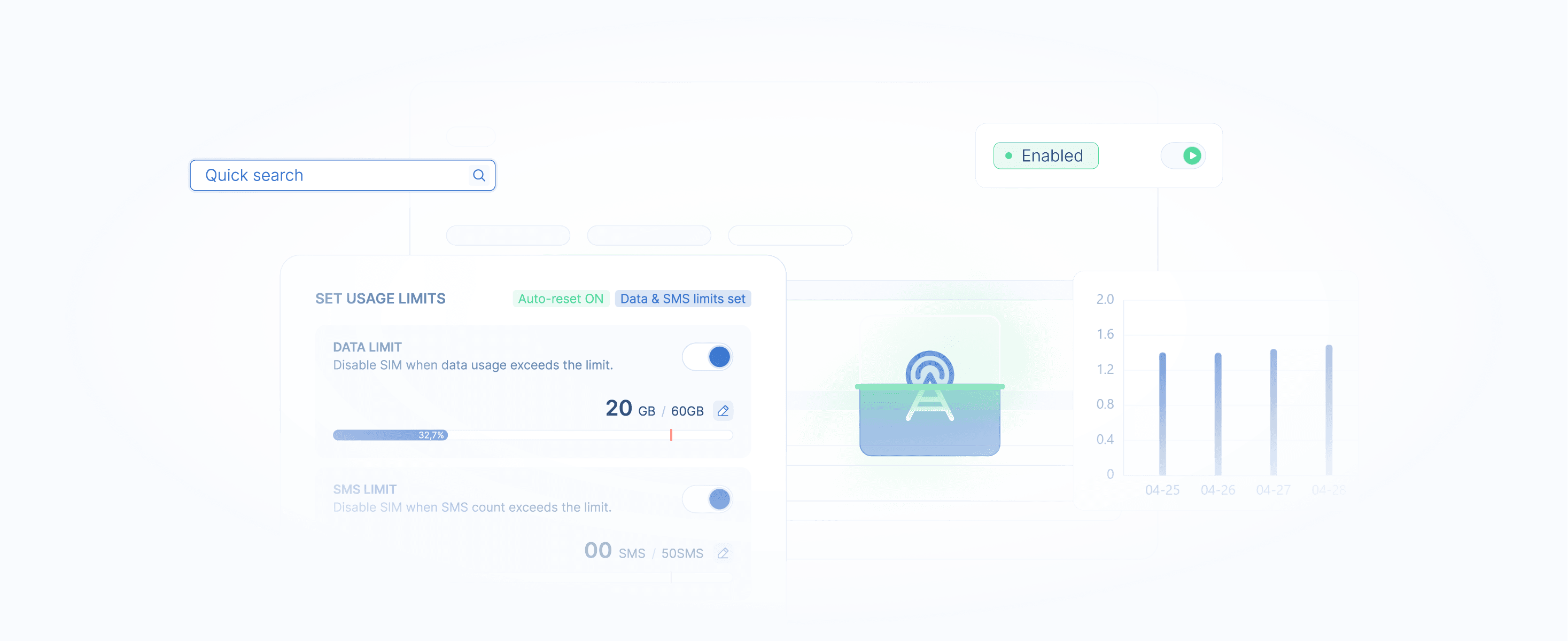
    Provision, suspend, organize, and monitor connectivity across laptops, tablets, rugged handhelds, kiosks, and other enterprise devices. Give IT complete visibility into usage, connectivity status, and diagnostics without logging into multiple carrier portals.

  • API · Webhooks

    Automate connectivity across your IT workflows.

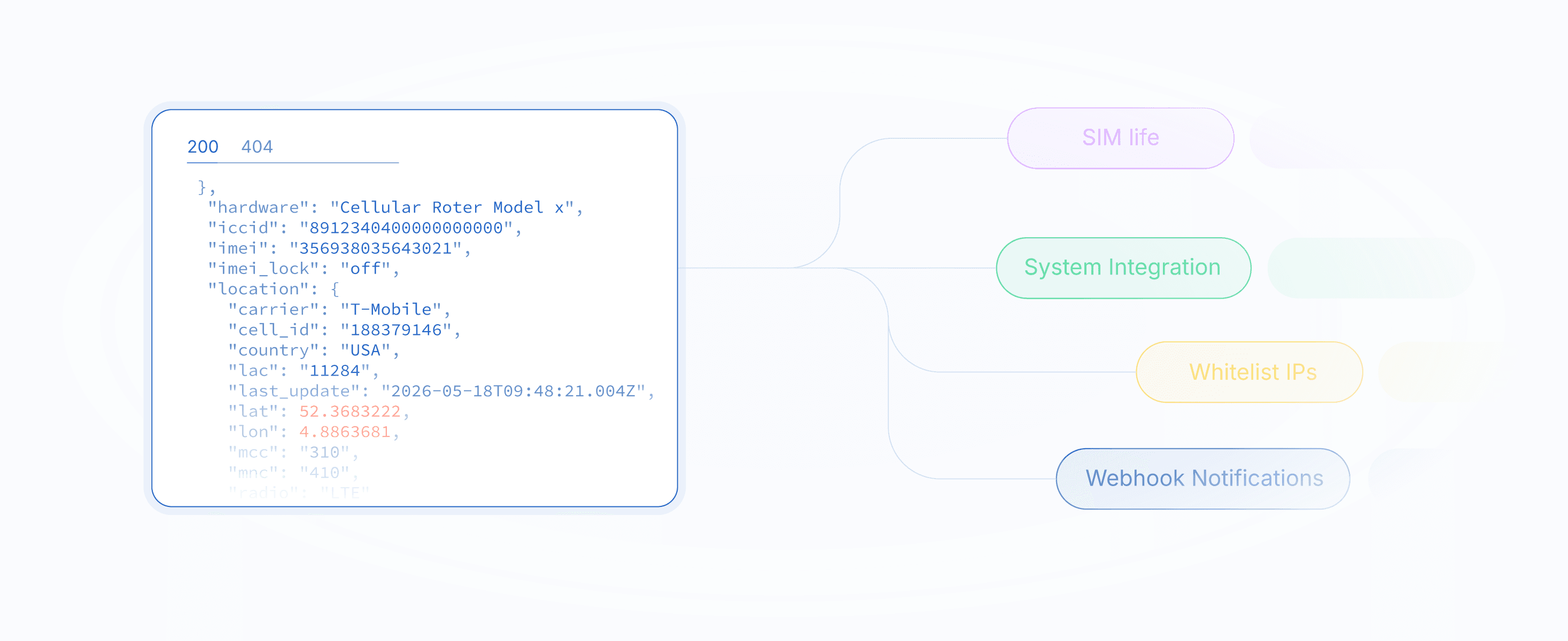
    Integrate Simbase with your existing MDM, UEM, ITSM, or asset management platforms to automate provisioning, lifecycle management, alerts, and connectivity workflows as devices are deployed, reassigned, or retired.

  • Pricing

    Connectivity that scales with your workforce.

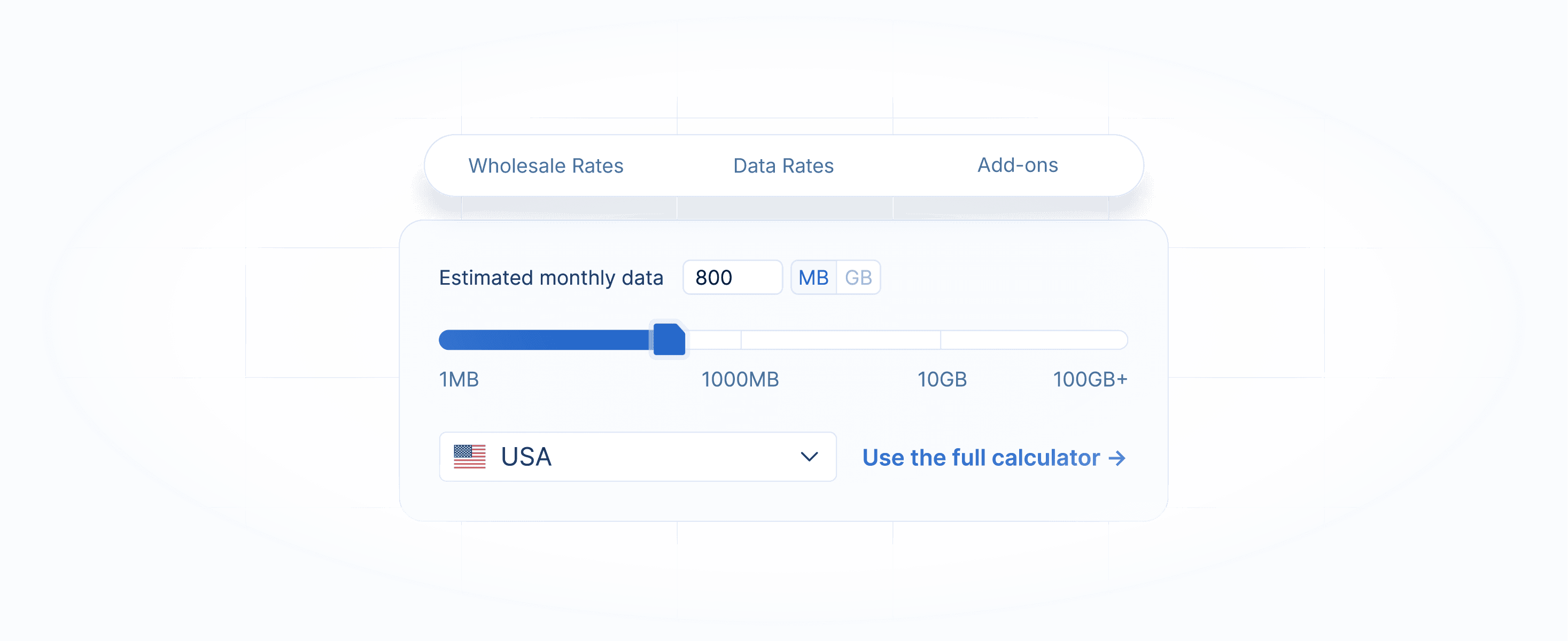
    Pay only for the devices that are active. Avoid long-term contracts, inflexible bundles, and unnecessary SIM costs while giving IT predictable, transparent pricing as deployments grow.

Technical specifications

Built for enterprise mobility deployments at scale.

Form factors
Plastic SIM (2FF, 3FF, 4FF), industrial MFF2, and eSIM (eUICC) to support laptops, tablets, rugged handhelds, kiosks, and embedded enterprise devices.
Global connectivity
Multi-IMSI connectivity across partner mobile networks in 180+ countries with automatic network selection for reliable coverage while users and devices move between regions.
Supported networks
4G LTE and 5G connectivity, with compatibility across a wide range of enterprise-grade laptops, tablets, routers, and rugged mobile devices.
Network management
Centralized dashboard for provisioning, usage monitoring, diagnostics, SIM lifecycle management, and real-time connectivity insights.
API & integrations
REST API (OpenAPI 3.0) and webhooks for integrating connectivity with MDM, UEM, ITSM, asset management, and internal provisioning workflows.
Network options
Dynamic IPv4 by default, with Static IPv4, IPv6, private APN, and IPsec VPN available for deployments requiring secure private networking.
Security & access
Role-based user access, audit logging, and secure API authentication to support enterprise governance and operational control.
Deployment
Pre-provisioned SIMs or API-driven activation, with bulk ordering and flexible deployment workflows for large-scale rollouts.
Compliance
GDPR-compliant data processing with enterprise security controls and regional deployment options available.
Compare approaches

How enterprise connectivity options stack up.

Features
Features
Simbase
Local MNO contract
Global management
One centralized platform
Separate portals and processes may be required by region
Network access
Multi-network connectivity
Direct access to a single carrier network
Provisioning
Dashboard, API, webhooks, and bulk actions
Often manual or dependent on carrier support
Per-SIM monthly minimum
No per-SIM monthly minimum
Commonly included in enterprise agreements
Contract flexibility
Month-to-month
Longer-term commitments are common
Diagnostics
Real-time connectivity visibility and diagnostics
Visibility varies by carrier and portal

Assessments as of 2026, based on publicly advertised plans and feedback from shared prospects. Published for transparency, not to disparage.

Built for enterprise mobility

Wherever work happens, connectivity has to follow.

  • Field Service Operations

    Connected beyond the office.

    Keep technicians online with rugged tablets, handhelds, and laptops for inspections, work orders, and real-time reporting.

  • Mobile Workforce

    Work securely from anywhere.

    Connect employee laptops and tablets with reliable cellular access to business applications wherever work takes them.

  • Retail & Customer-Facing Devices

    Always-on customer experiences.

    Keep kiosks, mobile POS, and in-store devices connected with centralized monitoring and remote management.

  • Hardware Vendors & MSPs

    Connectivity built into your solution.

    Bundle global cellular connectivity into your hardware or managed service through one platform and API.

Glossary

Plain-language terms.

Enterprise mobility
The strategy and technology used to securely deploy, manage, and support mobile devices, applications, and connectivity across an organization.
MDM
Software used to enroll, configure, secure, and monitor mobile devices such as laptops, tablets, smartphones, and rugged handhelds.
UEM
A platform that extends device management beyond mobile devices to include laptops, desktops, wearables, and other connected enterprise endpoints.
eSIM / eUICC
A digital SIM that can be remotely provisioned and updated over the air, allowing organizations to activate or switch mobile network profiles without replacing a physical SIM.
Private APN
A private mobile network that isolates enterprise device traffic from the public internet, providing greater security and control over how connected devices communicate.
MFF2
An industrial-grade, soldered SIM designed to be permanently embedded into enterprise devices, offering greater durability and reliability than removable SIM cards.
Multi-IMSI
A SIM technology that stores multiple carrier identities, allowing devices to access supported mobile networks for improved coverage and more reliable connectivity across regions.
Zero-touch provisioning
A deployment process that allows devices and connectivity to be automatically configured with little or no manual setup before reaching the end user.
Device lifecycle management
The process of provisioning, deploying, monitoring, reassigning, supporting, and retiring enterprise devices throughout their operational life.
Static IP
A fixed IP address assigned to a device or SIM, making it easier to support secure remote access, firewall rules, VPNs, and other enterprise networking requirements.

Frequently Asked Questions

If any of your questions remain unanswered, reach out to our team to answer them for you.

Can Simbase work alongside our existing mobile carrier?

Yes. Many organizations use Simbase alongside their existing carrier relationships. Whether you're supporting a pilot deployment, expanding into new regions, adding cellular backup, or connecting a specific fleet of devices, Simbase can complement your existing mobility strategy without requiring a complete carrier migration.

What types of enterprise devices does Simbase support?

Simbase supports a wide range of enterprise-connected devices, including laptops, tablets, rugged handhelds, kiosks, mobile POS systems, routers, gateways, digital signage, and other business-critical endpoints. Physical SIMs, industrial MFF2 SIMs, and eSIM (eUICC) are available depending on your hardware requirements.

How do we manage connectivity across multiple countries?

Simbase provides one centralized platform for managing connectivity across supported markets. Rather than maintaining separate carrier relationships, portals, and billing processes for each region, IT teams can provision SIMs, monitor usage, troubleshoot connectivity, and manage deployments globally through a single dashboard or API.

Can Simbase integrate with our existing IT tools?

Yes. Simbase offers a REST API and webhooks that allow you to integrate connectivity management with your existing MDM, UEM, ITSM, asset management, or internal provisioning systems. This helps automate device activation, lifecycle management, and operational workflows.

How quickly can new devices be activated?

Devices can be activated individually through the Simbase dashboard or in bulk using the API. Whether you're deploying ten devices or several thousand, connectivity can be provisioned to match your deployment workflow.

Can we suspend or reactivate devices when they're not in use?

Yes. Devices can be suspended and reactivated through the Simbase dashboard or API, making it easy to manage seasonal deployments, spare devices, employee turnover, or equipment that is temporarily out of service.

Can Simbase support both employee devices and shared devices?

Yes. Simbase supports connectivity for employee-assigned laptops and tablets, as well as shared devices such as kiosks, rugged handhelds, mobile POS systems, and other business-critical equipment managed by IT.

get started image

Put enterprise connectivity under your control.

Connect business-critical devices, support users across regions, and manage every deployment from one platform.

    IoT Connectivity for Enterprise Mobility | Multi-Network IoT SIMs