VPN for IoT devices

Secure remote access to every device

Keep device traffic private, control who can connect, and manage your fleet from one dashboard.

sim image

Why Add a VPN to Your IoT Deployment?

[object Object]

Remote Access

Reach devices for admin and updates even when they roam or sit behind carrier NAT.

[object Object]

Simple Security

Allow list one VPN endpoint, log connections, and meet IT policies without exposing device ports.

[object Object]

Private Path

Encrypt traffic end to end and keep device ports off the public internet.

The right VPN for every project

Private Network for Remote access

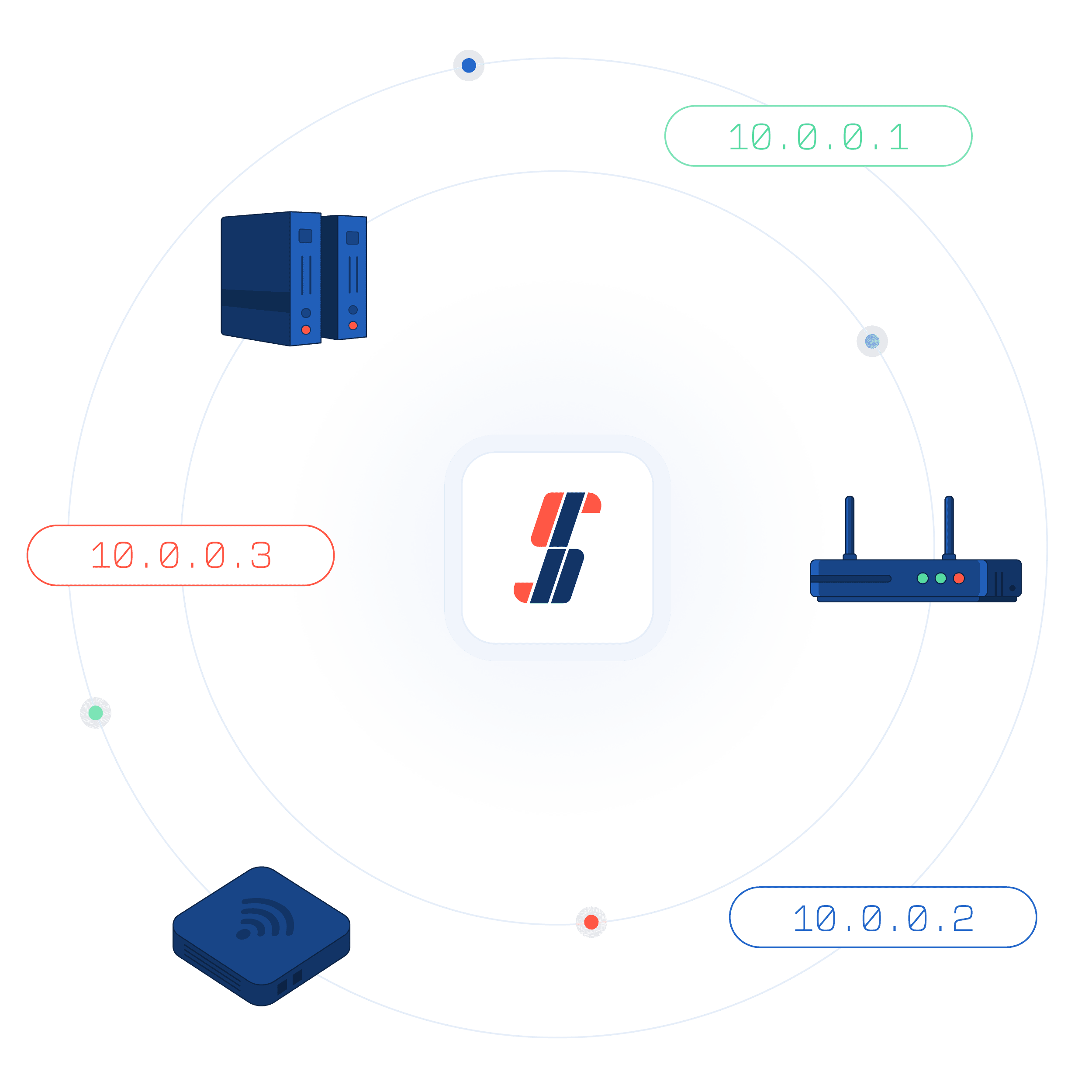
A Simbase private network creates an encrypted link between your infrastructure and deployed devices, giving you secure access to each SIM’s static private IP. Set it up in the dashboard with OpenVPN or IPsec to troubleshoot, update, and monitor devices without exposing them to the public internet.

  • list iconStatic private IPs for your SIMs
  • list iconOpenVPN with per-user accounts
  • list iconIPSec client support available

Enterprise VPN

A carrier-delivered Private APN with an IPsec tunnel to your network. Device traffic stays on the carrier core and traverses a private tunnel end to end, with optional exposure to the public internet.

  • list iconPrivate APN with dedicated IP ranges
  • list iconIPsec to your data center or cloud
  • list iconEnd-to-end isolation from the public internet
  • list iconOperator SLAs, change control, and audits

Build your own VPN with a Fixed IP SIM

Assign a static public IPv4 to each device and run your own VPN client or server to create an encrypted tunnel to your network. Commonly used for out of band management of corporate infrastructure. Reach routers, switches, servers, and gateways even when the primary WAN is down.

  • list iconStatic public IPv4 endpoint for every SIM
  • list iconOut of band access to network gear and servers
  • list iconLimit exposure by opening only the VPN port with keys or certificates
  • list iconFast, affordable option for one or a few devices

Frequently Asked Questions

If any of your questions remain unanswered, reach out to our team to answer them for you.

What is an IoT VPN?

An IoT VPN (Virtual Private Network) is a network security service that creates a secure, encrypted tunnel between your IoT devices and the internet. It protects the data sent and received by these devices, shielding them from cyber threats and unauthorized access. By encrypting data in transit, an IoT VPN enhances the security and privacy of your entire IoT deployment.

Why should I use an IoT VPN service?

Using an IoT VPN service ensures that your connected devices transmit and receive data over an encrypted connection. This helps:

Prevent unauthorized access to sensitive data

Reduce exposure to cyber attacks

Enable secure remote access and management

Support compliance with security standards

If your IoT devices handle sensitive information or require remote connectivity, an IoT VPN is essential for protecting both your data and your infrastructure.

How does a VPN for IoT devices work?

A VPN for IoT works by routing internet traffic from the device through a secure VPN tunnel to a remote server. This tunnel encrypts the data, making it unreadable to attackers and preventing interception.

Simbase supports multiple VPN protocols for IoT use cases, including:

OpenVPN – flexible, open-source, and ideal for secure remote access

IPSec – better suited for secure site-to-site communication or linking multiple fixed locations

Both options help secure data in transit while giving you reliable control over device communication.

What are the benefits of using an IoT VPN?

Key benefits of using an IoT VPN include:

End-to-end encryption of data between devices and servers

Secure remote access to IoT devices from any location

Protection against cyber threats such as eavesdropping or man-in-the-middle attacks

Improved compliance with industry data security standards

Reduced risk of unauthorized access or data breaches

How do I choose the right IoT VPN service?

The best IoT VPN solution depends on your use case and security requirements:

Choose OpenVPN for flexible, remote access to IoT devices. It’s easy to manage and compatible with most hardware.

Choose IPSec VPN for establishing secure site-to-site tunnels, ideal for industrial deployments and fixed-location communication.

Simbase offers both options with enterprise-grade encryption and seamless integration into your existing connectivity setup.

Can an IoT VPN protect against all types of cyber threats?

No, an IoT VPN only secures data in transit. It does not protect against:

Malware or viruses installed directly on the device

Physical tampering or device theft

Insecure firmware or outdated software

An IoT VPN is one part of a comprehensive IoT security strategy and should be combined with endpoint protection, device hardening, and regular updates.

What’s the difference between a standard VPN and an IoT VPN?

A standard VPN is designed for use with computers, smartphones, and tablets—devices with robust hardware and user interfaces.

An IoT VPN, on the other hand, is built specifically for resource-constrained devices such as:

Industrial sensors

Smart meters

Security cameras

Connected medical equipment

It must be lightweight, compatible with embedded systems, and capable of scaling across thousands of devices.

How do I set up an IoT VPN?

You can set up an IoT VPN using either OpenVPN or IPSec, depending on your deployment requirements.

Detailed, step-by-step setup instructions for both protocols are available in our documentation center. If you need assistance, the Simbase team is here to help with configuration and testing.

get started image

Get started with Simbase

  • arrowEncrypt
  • arrowProtect
  • arrowAccess