Built for work beyond the office, the Teltonika Rut360 router brings stable 4G power to any site that needs constant connection.
Teltonika Rut360 Verdict Summary
Design & Build Quality
Performance & Connectivity
Features & Functionality
Use Cases & Applications
Key features of Teltonika Rut360 Router
Pricing & Value
Simbase Expert Recommendation
Technical Specifications
Get started with Simbase
Frequently Asked Questions
By Jesse Hogenboom
October 1, 2025
Teltonika Rut360 Verdict Summary
The Teltonika Rut360 router strikes a balance between durability, speed, and manageability. This industrial 4G router review shows that the device is best suited for companies that value uptime and security. It fits into small enclosures, works with different carriers, and can be managed remotely. For logistics, manufacturing, or retail, it is a dependable choice. It is also strong in mobile settings, such as vehicles and portable kiosks.
Pros
Stable LTE Cat 6 connection with download speeds up to 300 Mbps
Dual SIM failover for backup and wider coverage
Wide cellular frequency band support for different regions
VPN, firewall, and RutOS security features
Remote management through Teltonika RMS
Compact metal design suited for industrial settings
Cons
The price is higher than that of basic LTE routers
Wi-Fi range is limited for large indoor areas
No support for 5G
Design & Build Quality
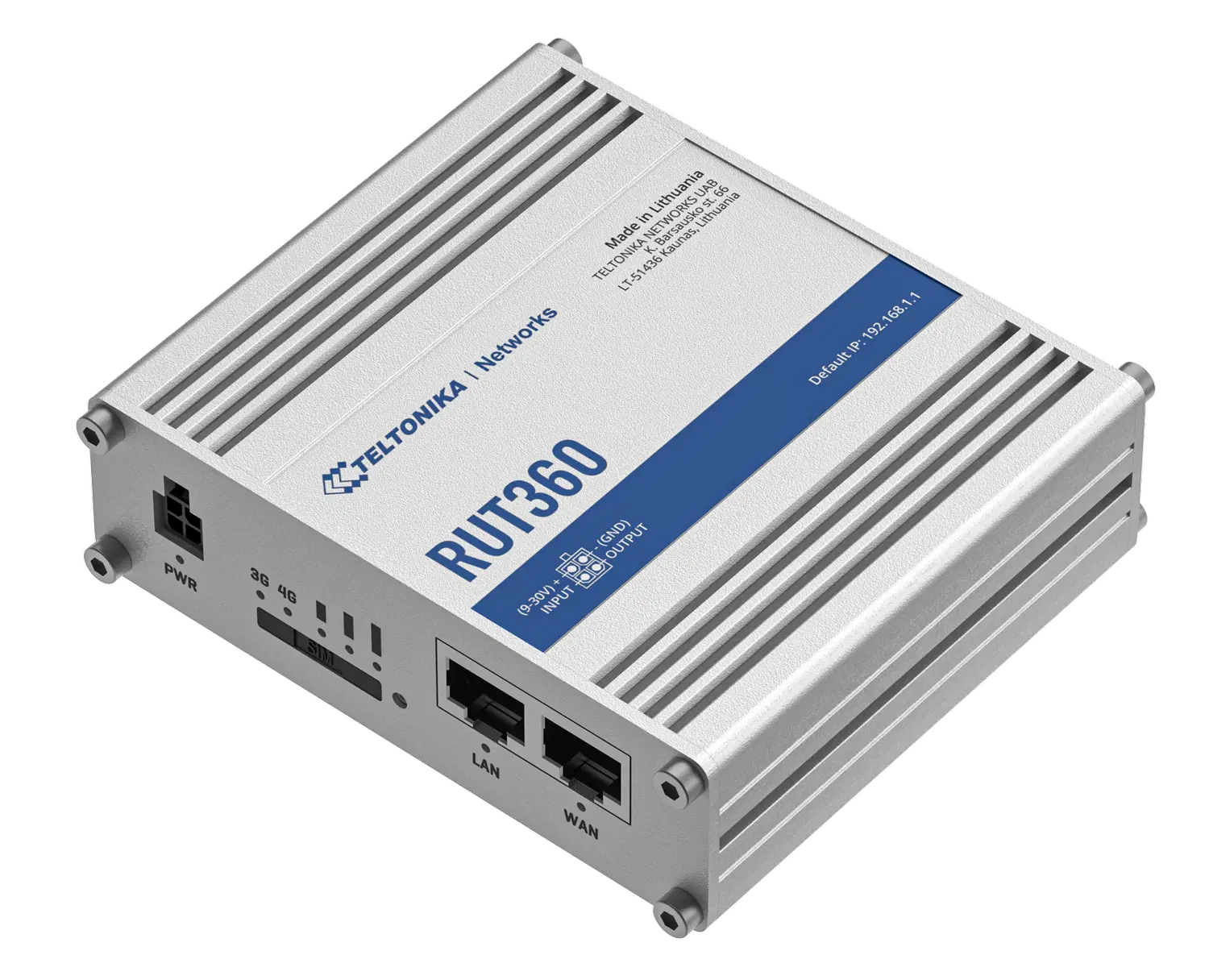
The Teltonika Rut360 does not try to look stylish. It is built as a tool, not a gadget. The body is made from metal, giving it a firm feel. Unlike plastic industrial LTE routers, it resists heat better and is less likely to crack under vibration. That is why it is often found in machines, vehicles, and control cabinets.
The Teltonika Rut360 is small. That helps when space is already crowded with meters, cables, or control boxes. You can screw it to a wall, slide it into a rack, or just keep it tucked inside a cabinet.
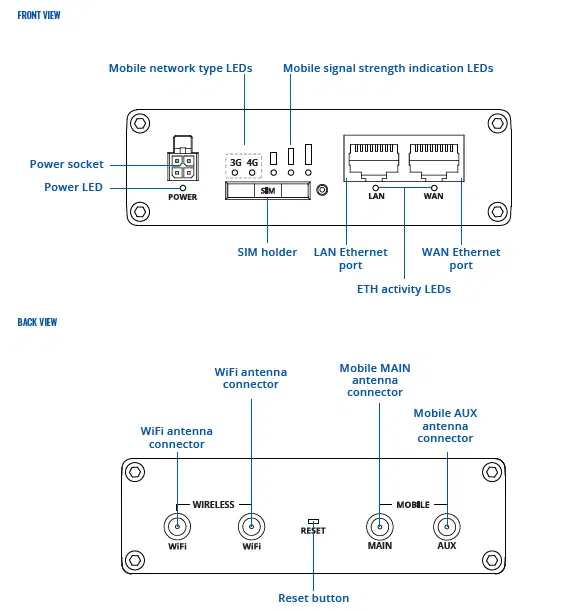
Setting it up is straightforward. The antenna ports are not hidden away, so you don’t waste time trying to reach them. IoT SIM cards connect without fuss. If a provider fails and you need to swap cards quickly, this saves minutes that would otherwise add to downtime.
Durability is more than just the metal case. The internal design helps with stable operation over time. In this industrial 4G router review, the hardware passed tests in settings where consumer routers would not last long.
Performance & Connectivity
Performance is where the Rut360 shows clear improvement over earlier models like the RUT240. The use of LTE Cat 6 with carrier aggregation means that in favorable conditions, download speeds reach up to 300 Mbps. Upload speeds remain strong enough for sensor networks, video feeds, or cloud connections.
What stands out more than raw speed is stability. In practice, the router holds connections without frequent drops. That is a key point for industrial monitoring and IoT projects, where small interruptions can lead to lost readings or system errors.
Dual SIM support is another reason this cellular router for IoT is valued. It allows users to set one provider as primary and another as backup. If coverage is weak or if the primary network fails, the router switches to the secondary SIM. That failover function reduces downtime and makes the router more reliable in areas with uneven coverage.
Latency is low enough for real-time tasks such as remote control, VoIP, or monitoring dashboards. Multi-network compatibility means it can operate across regions and with most major carriers. For global projects, this flexibility reduces the need to keep separate IoT hardware for each region.
Understanding IoT networks is essential for recognizing how devices interact and communicate within our changing modern world.
Features & Functionality
The Teltonika Rut360 router is more than just a box with antennas. It mixes speed, security, and control in a way that suits industrial use. Here’s what stands out:
LTE Cat 6 with carrier aggregation. Handles crowded networks better than older Cat 4 units. In practice, that means fewer dropped sessions and smoother data flow.
Dual-band Wi-Fi. Works on both 2.4 and 5 GHz. Not for wide office coverage, but fine for kiosks, vehicles, and small enclosures.
Ethernet ports. One WAN, one LAN, both at 10/100 Mbps. Good when a wired link is safer than wireless.
Security options. VPN protocols like OpenVPN and IPsec, plus firewall and access control. Enough to keep traffic protected.
Teltonika RMS. A remote management system that lets admins push updates or change settings from a central desk. Saves time when routers are scattered across sites.
Extra functions. SMS control for quick fixes, watchdog restarts if the unit freezes, and event logging. Not flashy, but practical.
Use Cases & Applications
The Teltonika Rut360 is not made for homes. It fits into professional projects where steady mobile internet is part of the job. Examples include:
Fleet tracking: Keeps vehicles online as they move across regions. Dual SIM helps avoid coverage gaps.
Digital signage: Powers displays in airports, malls, and transport hubs where fixed lines are rare. Updates reach screens without delay.
Manufacturing: Connects machines, sensors, and control systems. Continuous operation is key on production floors.
Smart kiosks: Payment or ticket machines need a small gear that works without a fixed internet connection. The Rut360 gives that stability.
Renewable energy sites: Solar farms and wind turbines are often far from towns. This industrial LTE router provides the link needed for monitoring and remote control.
Key features
Key features of Teltonika Rut360 Router
Speed
300 Mbps / 50 Mbps
LAN Ports
1 x LAN Port
WAN Ports
1 x WAN Port
Slots
1 x SIM Slot
Cellular Modem
(4G LTE Cat. 6)
WIFI
WIFI 4 (11n)w
Pricing & Value
Our Teltonika Rut360 review would not be complete without discussing cost. The router is priced above entry-level models like the RUT200 or RUT240, but below enterprise-grade 5G equipment. It stands in the mid-range segment.
When placed against alternatives in the industrial LTE router market, the Rut360 offers a fair balance. It is more expensive than entry models but provides features such as Cat 6, dual SIM, and remote management that justify the difference. It is cheaper than heavy enterprise models, yet strong enough for most industrial tasks.
Simbase Expert Recommendation
From the point of view of a specialist, the Teltonika Rut360 is a reliable and practical choice for industries that need steady mobile connectivity. It is not over-engineered, but it is solid in the areas that matter: durability, stability, and management.
In this Teltonika Rut360 review, the combination of LTE Cat 6 speed, secure VPN support, and RMS management shows why it is respected in the Teltonika Rut360 review category. It is not the cheapest, and it is not a high-end enterprise device either. It sits in the middle, where balance is often more valuable than extremes.
For Simbase customers, the router pairs well with our connectivity services. Hardware is only one part of the solution. Reliable data plans and monitoring complete the picture. Together, they provide businesses with a setup that reduces downtime and keeps IoT systems running.
Our conclusion: The Teltonika Rut360 is not perfect, but it does what most companies actually need. It stays online, it is secure enough for serious work, and it lasts longer than cheaper units. For factories, fleets, or remote kiosks, that balance makes it the best IoT router worth considering.
If any of your questions remain unanswered, reach out to our team to answer them for you.
What VPN services are supported by the RUT360?
The router supports various VPN technologies, including OpenVPN, IPsec, WireGuard, and more, ensuring secure remote connections.
What environmental conditions can the RUT360 operate under?
Designed for industrial environments, it operates within a temperature range of -40 °C to 75 °C and has an IP30 ingress protection rating.
Can the RUT360 be used in mobile applications?
Yes, its robust design and dual SIM functionality make it suitable for vehicular applications, ensuring continuous connectivity on the move.
Does the RUT360 offer any digital interfaces for sensor or equipment integration?
The router includes digital I/O ports for connecting sensors or devices, enabling versatile applications in different industrial scenarios.
What types of connections and ports does the RUT360 have?
The RUT360 is equipped with Ethernet ports, digital I/Os, and multiple antenna connectors for LTE and Wi-Fi, supporting a range of physical connections.




 Stable LTE Cat 6 connection with download speeds up to 300 Mbps
 The price is higher than that of basic LTE routers